

Citizen Engagement Platforms: Connecting Governments with Citizens
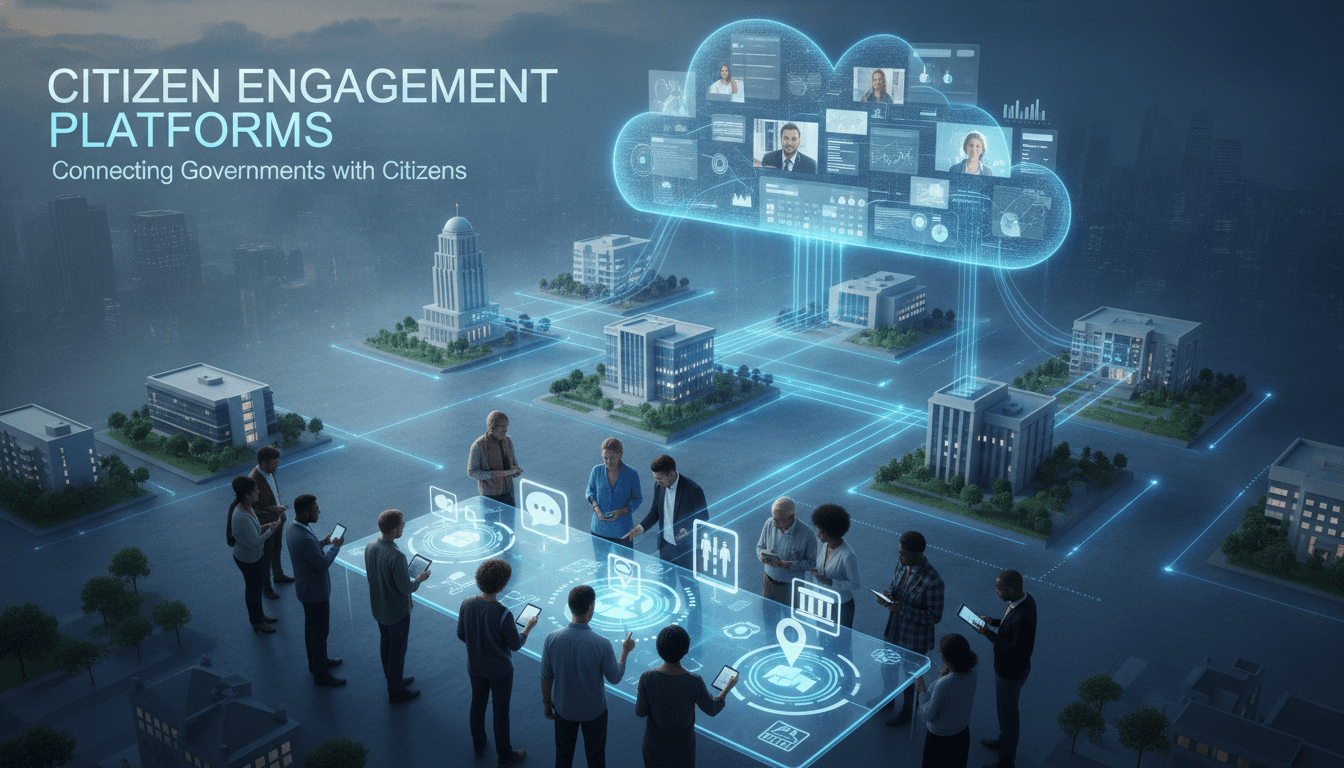
Governments worldwide are under pressure to do more with constrained budgets, ageing infrastructure, and citizens who now expect the same digital experience from a council portal that they get from a consumer app. Citizen engagement platforms are how that gap gets closed — or at least narrowed.
This post covers what these platforms actually look like under the hood, the architectural decisions that matter, and where most implementations go wrong.
What Does a Citizen Engagement Platform Actually Do?
The term gets used loosely, so it helps to be specific. At its core, a citizen engagement platform is a system that allows government bodies to communicate with residents, collect structured input, process service requests, and close the feedback loop — all through digital channels.
That sounds simple. In practice it spans:
- Multi-channel intake (web, mobile, USSD, WhatsApp, IVR)
- Identity verification tied to national ID systems or Aadhaar-equivalent APIs
- Case management workflows with SLA tracking
- Integration with back-office ERP and legacy departmental systems
- Analytics on participation rates, resolution times, and sentiment
The platforms that only address one or two of these are usually pilots that never scale.
The difference between engagement and e-governance
E-governance is transactional: pay a fine, renew a licence, file a return. Engagement goes further. It includes participatory budgeting, public consultations on policy, grievance redressal with escalation paths, and community reporting tools like pothole trackers or waste management alerts.
Most governments need both, and the mistake is building them as entirely separate systems with no shared identity or data layer.
What Does the Architecture Look Like at Scale?
A single city authority might handle 50,000 service requests a month. A national-level deployment could handle ten times that. The architecture has to reflect that difference from day one.
Identity and authentication
Single sign-on across departments is the hardest problem to solve, not the most glamorous. Citizens should not need a separate login for each departmental service. OAuth 2.0 with OpenID Connect works well as the federation layer. For countries with national digital identity infrastructure (India's DigiLocker, the EU's eIDAS), integrating at that level is preferable to building a parallel identity store.
Role-based access for government staff is equally important. A ward-level officer should not have access to city-wide sensitive data. ABAC (Attribute-Based Access Control) handles this more precisely than RBAC for complex org structures.
Multi-channel architecture
A REST API gateway — typically Kong or AWS API Gateway — sits in front of all services. WhatsApp Business API handles a significant share of citizen interaction in markets where WhatsApp penetration exceeds 70%, which includes most of South Asia and Latin America. USSD remains critical for feature-phone users in rural areas and cannot be deprioritised in a national rollout.
The front-end stack matters less than the API contract. React and Next.js are common choices for the web layer. Flutter works well for the mobile app if you need iOS and Android from one codebase without separate teams.
Backend and integrations
Microservices make sense here because each department often has different release cycles and ownership. A grievance service, a permit service, and a payments service should be independently deployable. Kubernetes on GKE or EKS handles orchestration. Event-driven communication via Kafka or Google Pub/Sub decouples the services and gives you an audit trail by default.
The integration layer is where projects stall. Legacy departmental systems run on Oracle EBS, SAP, or custom-built COBOL-era software. You need an integration middleware layer — MuleSoft or Apache Camel depending on budget and team familiarity — that translates between modern REST/GraphQL APIs and whatever the legacy system speaks.
/// Not sure where to start?
Get the architecture before you commit
Tell us what you're building and we'll map the technical approach, stack, and rough timeline. No cost, no obligation, no sales call required.
How Do You Handle Data Privacy and Security?
Government platforms hold sensitive personal data. The compliance obligations are real, and the reputational cost of a breach is severe.
At the data layer, field-level encryption for PII using AES-256 is standard. Separate encryption keys per department, managed through a KMS like AWS KMS or HashiCorp Vault, limits blast radius if one key is compromised. Data residency requirements vary by jurisdiction — India's DPDP Act, the EU's GDPR, and Kenya's Data Protection Act 2019 all have different rules on where data can be stored and for how long.
For API security, mTLS between internal services and rate limiting at the gateway level are non-negotiable. WAF rules specific to government portals (which face a higher volume of credential stuffing and scraping attacks than typical consumer apps) should be tuned, not left at default.
Penetration testing before any public launch is essential. OWASP Top 10 coverage is the baseline. Government deployments in many jurisdictions also require VAPT reports as part of procurement compliance.
Where Do Most Implementations Fail?
The technology is rarely the primary failure mode. The implementation failures tend to cluster around a few predictable problems.
Change management is underestimated. Government staff who have processed requests on paper for years do not automatically adopt a new portal. Without proper training, parallel processes persist for months, defeating the purpose of the platform.
SLA definition is vague at the start. What counts as "resolving" a pothole complaint? When is a building permit considered "processed"? If these definitions are not agreed on before the system is built, the workflow engine cannot enforce them.
Accessibility is an afterthought. WCAG 2.1 AA compliance is a legal requirement in many jurisdictions and a practical necessity for reaching elderly or differently-abled citizens. Screen reader compatibility, sufficient colour contrast, and keyboard navigation need to be designed in, not retrofitted.
Analytics are not acted on. Most platforms generate good data on participation rates and resolution times. Very few governments have the internal capacity to close the loop and use that data to adjust service delivery. Build the dashboard, but also plan for who owns the insights and what they do with them.
Is Building In-House or Outsourcing the Right Call?
This depends on the government's existing technical capacity, not on a general principle.
| Factor | Favour In-House | Favour Outsourcing |
|---|---|---|
| Existing engineering team | 20+ engineers with relevant stack experience | Small IT department, mostly ops-focused |
| Timeline | 18+ months acceptable | Pilot needed in 6 months |
| Customisation depth | Highly specific workflows | Standard grievance and service request flows |
| Long-term ownership | Agency wants full control of roadmap | Managed service model acceptable |
| Budget structure | Capex-friendly | Opex-friendly |
A hybrid model often works in practice: outsource the platform build and initial integrations, but insist on full source code ownership and knowledge transfer so the in-house team can maintain and extend it independently.
If you outsource, be specific about what you want delivered: not just a working platform, but documented APIs, CI/CD pipelines, runbooks, and at least one knowledge transfer sprint before handover.
Conclusion
Citizen engagement platforms are infrastructure, not just software products. The decisions you make on identity federation, integration architecture, and data residency will constrain every feature you build for the next decade.
Start with a well-defined pilot scope: one city, one use case, one department. Validate the architecture decisions before you commit to a national rollout. That single constrained deployment will surface the integration and change management problems that no amount of planning fully anticipates.
If you're working through the architecture decisions for a government platform and want a second opinion on specific components, reach out to the team at Sodio.
FAQ
What is a citizen engagement platform? A citizen engagement platform is a digital system that lets government bodies receive service requests, run public consultations, manage grievances, and communicate with residents through channels like web, mobile, and WhatsApp. It differs from basic e-governance portals by supporting two-way interaction and structured feedback loops, not just transactional services.
How long does it take to build and deploy one? A focused pilot covering one department and one city typically takes four to six months from requirements to live deployment. A full-scale national platform with multiple departmental integrations, multi-channel support, and compliance certification realistically takes 12 to 18 months. Rushing the integration and compliance phases is where most projects accumulate technical debt.
What are the biggest security risks? Credential stuffing against citizen login portals, insecure direct object references that expose another citizen's case data, and misconfigured API gateways that leak internal service endpoints are the most common issues. VAPT before launch and regular pen testing quarterly thereafter are the minimum acceptable standards for a government-facing platform.
Can existing legacy systems be integrated? Yes, but it requires a dedicated integration middleware layer. MuleSoft, Apache Camel, and WSO2 are common tools. The effort depends on how well-documented the legacy system's APIs or database schema are. Expect this to be the most time-consuming part of the project, often consuming 30 to 40 percent of total engineering effort.
What does citizen adoption actually depend on? Primarily trust and simplicity. Citizens will use the platform if they believe their request will be acted on and if the interface works on their actual device and connection speed. Adoption figures from platforms like India's MyGov suggest that mobile-first design and SMS/WhatsApp notification of status updates are the strongest drivers of return usage.
Have a project in mind? Contact Sodio Technologies to discuss your requirements and explore the right technology solution for your business.
/// Work with us
Talk to the engineers who'd build it
You'll get a technical scope, timeline and cost estimate from the people doing the work, not an account manager. In-house team, no subcontracting, since 2016.