
Customer Relationship Management (CRM): Enhancing Customer Loyalty
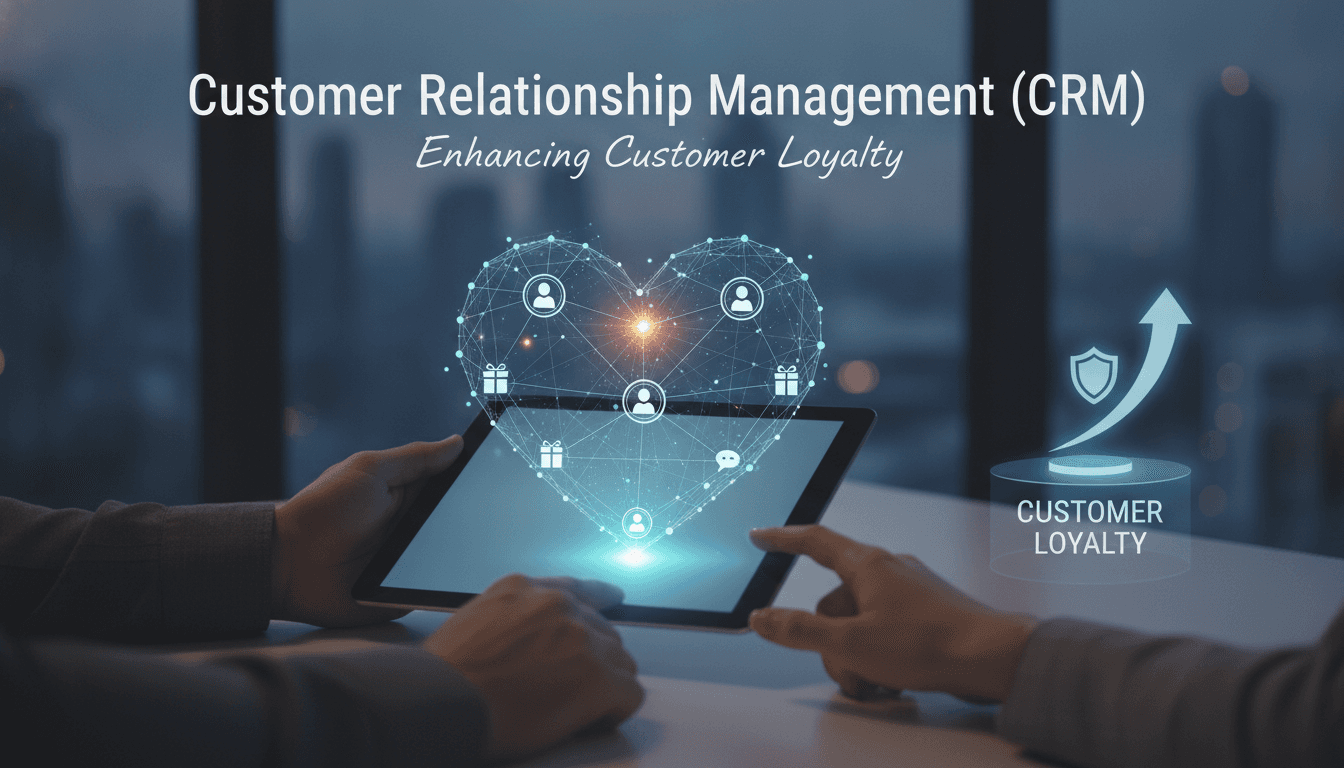
A well-implemented CRM is not a contact database. It is the operational backbone that determines whether your customer relationships compound over time or quietly decay. This post covers what actually separates CRM systems that drive retention from ones that collect dust.
What Does a CRM Actually Do That a Spreadsheet Cannot?
The honest answer is: event-driven state management at scale.
A spreadsheet is a snapshot. A CRM is a timeline. Every interaction, touchpoint, support ticket, renewal, upsell, and churn signal gets logged with a timestamp and an actor. That temporal dimension is what lets you build cohort analyses, predict churn 90 days out, and automate follow-ups that feel personal because they are timed to real customer behaviour, not a generic drip sequence.
Beyond storage, a CRM is an orchestration layer. When a customer hits a usage threshold in your product, a properly configured CRM (Salesforce with Platform Events, HubSpot with Workflows, or a custom system built on an event bus like Kafka) can trigger a sequence: flag the account for an upsell, notify the account manager, suppress the next onboarding email, and start a 14-day clock for a check-in call. None of that is possible in a spreadsheet.
Where off-the-shelf CRMs break down
Salesforce, HubSpot, and Zoho are solid general-purpose tools. They break down when your data model does not fit their entity structure. If your product has multi-sided relationships (think: a marketplace where one account is both a buyer and a seller), you will spend 60% of your implementation budget working around object limitations rather than building for your actual use case.
Custom CRM builds make sense when you have a genuinely unusual domain model, high transaction volume that makes per-seat licensing uneconomical, or strict data residency requirements that cloud SaaS vendors cannot meet.
How Do You Actually Measure Customer Loyalty Through CRM Data?
Loyalty is a lagging indicator. You need to measure the leading indicators that predict it.
The three worth instrumenting from day one:
- Product engagement depth — not logins, but feature adoption rate and workflow completion. A customer who uses 7 of your 10 core features is materially less likely to churn than one using 2.
- Support ticket sentiment over time — using a classifier (even a simple BERT-based one fine-tuned on your historical tickets) you can track whether a customer's tone is improving or degrading across interactions.
- Expansion velocity — how quickly does a customer move from the plan they signed on to a higher tier? Customers who expand within the first 90 days have significantly better 24-month retention.
Most CRMs do not compute these natively. You wire them in through custom fields, calculated properties, or a data warehouse layer (Snowflake, BigQuery) that feeds back into the CRM via API. The CRM becomes the interface; the warehouse becomes the source of truth for analytics.
Health scores and how to not make them meaningless
Customer health scores are common and usually useless because they are averages. Averaging login frequency, NPS, and ticket volume into a single number loses the signal from each component. A customer can have a high health score and be actively evaluating a competitor.
Build component scores instead. Store each dimension separately in your CRM. Let your account managers see the raw signals. A customer with high product engagement, low NPS, and two escalated tickets in the last 30 days is a very specific profile that needs a very specific intervention, not a generic "health score: 72" tag.
/// Not sure where to start?
Get the architecture before you commit
Tell us what you're building and we'll map the technical approach, stack, and rough timeline. No cost, no obligation, no sales call required.
Personalisation at Scale: Where the Engineering Gets Interesting
Personalisation in CRM breaks into two problems: data availability and delivery timing.
Data availability is solved by a Customer Data Platform (CDP) sitting upstream of your CRM. Tools like Segment or RudderStack collect events from your product, website, and mobile app, unify them under a single customer profile, and push enriched profiles into your CRM. Without this layer, your CRM has demographic data but not behavioural data, which means your personalisation is limited to "Hello [First Name]" rather than "You haven't completed your first report yet."
Delivery timing is an ML problem. The optimal send time for a re-engagement email is not 10am Tuesday for everyone. It is different per customer based on their historical open patterns. Most CRMs have native send-time optimisation now (HubSpot's AI Send Time, Salesforce Einstein Engagement Frequency), but they require a minimum dataset size (typically 1,000+ interactions per customer segment) before the predictions are reliable.
Below is a practical comparison of approaches depending on your scale:
| Scenario | Recommended approach | Tooling |
|---|---|---|
| Under 5,000 customers | Rule-based segmentation in CRM | HubSpot Workflows or Salesforce Flow |
| 5,000 to 50,000 customers | CDP + CRM with ML send-time optimisation | Segment + HubSpot or Salesforce |
| Over 50,000 customers | Custom propensity models feeding CRM via API | Snowflake + Python models + Salesforce Platform Events |
| Unusual data model or data residency | Custom CRM build | PostgreSQL, Kafka, custom service layer |
Retention Workflows That Actually Move the Metric
The highest-leverage automations are not the welcome sequence. They are the ones triggered by negative signals.
A customer who has not logged in for 14 days after previously logging in daily is a different risk profile than a customer who has always logged in weekly. Your CRM workflow needs to know the difference. That means storing per-customer baseline behaviour, not just comparing against a global average.
Specific workflows worth building:
- Churn prediction trigger: when a customer's rolling 30-day engagement drops 40% below their personal baseline, create a task for their account manager and suppress all marketing emails for 21 days.
- Renewal risk flag: 90 days before renewal, pull the customer's support ticket count, NPS score, and expansion/contraction history. If two of three are negative, route to a dedicated save team rather than automated renewal flow.
- Advocacy identification: customers who submit positive reviews, refer peers, or expand by over 30% within 12 months get tagged for a customer advisory board invite rather than a generic loyalty reward.
The logic is not complex. The gap most teams have is that these triggers require clean, structured data flowing into the CRM consistently, which is an instrumentation problem more than a CRM configuration problem.
Conclusion
The ceiling on your CRM's impact is set by the quality of the data going into it, not the features of the platform. Get your event tracking right. Unify your customer profiles before trying to personalise. Build component health scores, not composite ones.
If you are evaluating whether to extend an existing CRM or build something custom, the decision hinges on data model fit and volume economics rather than feature lists. If your domain is unusual enough that you are spending more time mapping your entities into Salesforce objects than building actual customer logic, that is a signal worth taking seriously.
The next concrete step: audit the events your product fires today. If you cannot answer "what did this customer do in the last 30 days" from your CRM without running a SQL query, your instrumentation is the problem to fix first.
FAQ
What is the difference between a CRM and a CDP? A CRM manages relationships and sales processes. A Customer Data Platform (CDP) collects and unifies behavioural data from multiple sources into a single customer profile. Most mature stacks use both: the CDP enriches the data, and the CRM is the interface where teams act on it.
When does it make sense to build a custom CRM rather than use Salesforce or HubSpot? When your data model genuinely does not fit standard CRM entity structures, when per-seat licensing costs exceed the cost of a custom build at your volume, or when you have data residency requirements that cloud SaaS vendors cannot meet. Otherwise, off-the-shelf is almost always faster.
How do you calculate a useful customer health score? Avoid collapsing everything into a single number. Store each dimension separately: engagement depth, support sentiment, NPS trend, expansion velocity. A composite score loses signal. Account managers need to see the raw components to diagnose the right intervention.
What data do you need before ML-based personalisation is reliable? Most platforms need a minimum of around 1,000 historical interactions per customer segment before send-time or content personalisation models produce reliable predictions. Below that threshold, well-designed rule-based segmentation will outperform an under-trained model.
Is CRM integration with a product analytics tool necessary? Not strictly necessary, but it materially changes what you can do. Without product behavioural data in your CRM, your segmentation is based on demographics and purchase history. With it, you can trigger workflows on actual product usage signals, which are stronger predictors of churn and expansion than demographic data alone.
Have a project in mind? Contact Sodio Technologies to discuss your requirements and explore the right technology solution for your business.
/// Work with us
Talk to the engineers who'd build it
You'll get a technical scope, timeline and cost estimate from the people doing the work, not an account manager. In-house team, no subcontracting, since 2016.