

Build Engaging Play-to-Earn Games with Ownershipand Sustainable Reward Systems
Transform your game concept into a custom Web3 ecosystem where players can compete, progress, own digital assets, and receive rewards for verified gameplay. Sodio develops Play-to-Earn games with immersive mechanics, NFT assets, embedded wallets, in-game marketplaces, smart contracts, multiplayer systems, and scalable blockchain infrastructure.


TRUSTED BY TEAMS







/// INTRODUCTIONS
What is a Play-to-Earn Game?
A Web3 Play-to-Earn, or P2E, game is a blockchain-enabled gaming platform where eligible player activities can generate in-game rewards, digital assets, points, NFTs, or supported tokens.
Depending on the game, players may receive rewards for:
 Completing missionsWinning competitive matchesReaching progression milestonesParticipating in tournamentsCollecting or crafting assetsContributing to guild activitiesAchieving leaderboard positionsCompleting seasonal challengesCreating approved game contentParticipating in community events
Blockchain can provide verifiable ownership and transaction records for selected game assets. Players may be able to hold, use, transfer, trade, upgrade, or rent those assets according to the game's rules.
At Sodio, we build custom P2E games from the ground up. We prioritize engaging gameplay, sustainable economic design, accessible onboarding, and meaningful digital ownership rather than creating a product that depends entirely on financial speculation.

///SERVICES
Our Play-to-Earn Game Development Services

Custom P2E Game Development
Design and develop a complete Play-to-Earn game based on your genre, gameplay mechanics, target audience, platform, reward model, and business objectives.

P2E Game Concept Development
Transform your initial idea into a structured gaming concept covering gameplay loops, player progression, reward mechanics, digital assets, monetization, and long-term content.

Game Design Document Development
Prepare a detailed Game Design Document defining game rules, characters, levels, missions, rewards, assets, user journeys, economy, and technical requirements.

Play-to-Earn Smart Contract Development
Develop smart contracts for NFT minting, rewards, marketplace transactions, asset upgrades, crafting, staking, rentals, tournaments, and governance.

NFT Game Asset Development
Create blockchain-based characters, weapons, skins, cards, land, equipment, collectibles, achievements, and other supported game assets.

In-Game NFT Marketplace Development
Build a marketplace where players can buy, sell, auction, offer, rent, and exchange eligible game assets.

Gaming Wallet Development
Develop embedded, custodial, non-custodial, MPC, or account-abstraction wallets for managing game assets, rewards, and blockchain transactions.

P2E Tokenomics Design
Design reward emissions, game currencies, NFT supply, asset utility, marketplace fees, token sinks, treasury allocation, and economic controls.

Multiplayer P2E Game Development
Build real-time or turn-based multiplayer experiences with matchmaking, rankings, tournaments, guilds, cooperative gameplay, and competitive modes.

Reward Engine Development
Create configurable systems that calculate and distribute points, experience, game assets, NFTs, or approved blockchain rewards.
Anti-Bot and Fraud Prevention
Develop controls for detecting automated gameplay, multiple-account abuse, manipulated results, duplicate claims, and suspicious reward activity.
Existing Game Web3 Integration
Add NFTs, wallets, rewards, smart contracts, marketplaces, and blockchain ownership to a compatible existing game.
Design and develop a complete Play-to-Earn game based on your genre, gameplay mechanics, target audience, platform, reward model, and business objectives.
Transform your initial idea into a structured gaming concept covering gameplay loops, player progression, reward mechanics, digital assets, monetization, and long-term content.
Prepare a detailed Game Design Document defining game rules, characters, levels, missions, rewards, assets, user journeys, economy, and technical requirements.
Develop smart contracts for NFT minting, rewards, marketplace transactions, asset upgrades, crafting, staking, rentals, tournaments, and governance.
Create blockchain-based characters, weapons, skins, cards, land, equipment, collectibles, achievements, and other supported game assets.
Build a marketplace where players can buy, sell, auction, offer, rent, and exchange eligible game assets.
Develop embedded, custodial, non-custodial, MPC, or account-abstraction wallets for managing game assets, rewards, and blockchain transactions.
Design reward emissions, game currencies, NFT supply, asset utility, marketplace fees, token sinks, treasury allocation, and economic controls.
Build real-time or turn-based multiplayer experiences with matchmaking, rankings, tournaments, guilds, cooperative gameplay, and competitive modes.
Create configurable systems that calculate and distribute points, experience, game assets, NFTs, or approved blockchain rewards.
Develop controls for detecting automated gameplay, multiple-account abuse, manipulated results, duplicate claims, and suspicious reward activity.
Add NFTs, wallets, rewards, smart contracts, marketplaces, and blockchain ownership to a compatible existing game.
///CORE FEATURES
Play-to-Earn Games We Develop
We develop P2E games across different genres and platforms.


/// ARCHITECTURE
Core Play-to-Earn Game Features
Every game is customized around its audience, gameplay, economy, and platform.
Player Features
Gameplay Features
Web3 Features
/// CORE FEATURES
Advanced P2E Game Features
Depending on your product roadmap, we can implement:
How a Play-to-Earn Game Works
Player Registration
The player creates an account using email, social login, an external wallet, or an embedded wallet.
Game Entry
The player accesses the game using free starter assets, purchased assets, rented NFTs, or another onboarding model defined by the platform.
Gameplay Participation
The player completes missions, matches, challenges, tournaments, or other eligible activities.
Activity Verification
The game validates the player's performance, eligibility, account status, and anti-fraud conditions.
Reward Calculation
The reward engine calculates points, experience, assets, or approved token rewards according to predefined game rules.
Reward Distribution
Rewards are added to the player's account, inventory, or wallet. Blockchain-based rewards may require a claim transaction.
Asset Utility
Players may use eligible assets for gameplay, upgrades, crafting, access, customization, staking, or marketplace activity.
Ecosystem Participation
Players can join guilds, tournaments, seasonal events, creator programs, or selected governance activities.
The player creates an account using email, social login, an external wallet, or an embedded wallet.
The player accesses the game using free starter assets, purchased assets, rented NFTs, or another onboarding model defined by the platform.
The player completes missions, matches, challenges, tournaments, or other eligible activities.
The game validates the player's performance, eligibility, account status, and anti-fraud conditions.
The reward engine calculates points, experience, assets, or approved token rewards according to predefined game rules.
Rewards are added to the player's account, inventory, or wallet. Blockchain-based rewards may require a claim transaction.
Players may use eligible assets for gameplay, upgrades, crafting, access, customization, staking, or marketplace activity.
Players can join guilds, tournaments, seasonal events, creator programs, or selected governance activities.
/// UTILITY DESIGN
Play-to-Earn Reward Models
A P2E game can reward users through different mechanisms.
Mission-Based Rewards
Players receive eligible rewards after completing specific missions, quests, or objectives.
Competitive Rewards
Rewards are distributed according to match results, rankings, tournament positions, or leaderboard performance.
Progression Rewards
Players unlock assets, abilities, badges, or benefits as they reach new levels and milestones.
Achievement Rewards
Special rewards are provided for completing difficult, rare, or long-term objectives.
Seasonal Rewards
Players participate in time-limited campaigns, leagues, battle passes, and seasonal events.
Guild Rewards
Teams or guilds receive rewards for collaborative missions, tournaments, territory control, or community activity.
Creator Rewards
Approved users can receive rewards for creating game assets, environments, events, or other platform content.
Loyalty Rewards
Long-term players may unlock memberships, access rights, collectibles, or platform benefits.
///TOKEN TYPES
Play-to-Earn Smart Contracts We Develop

NFT Minting Contracts
Create characters, weapons, equipment, land, cards, collectibles, achievements, and other supported digital assets.

Reward Claim Contracts
Allow eligible players to claim blockchain-based rewards after verified gameplay activities.

Marketplace Contracts
Manage asset listings, purchases, offers, auctions, rentals, fees, and ownership transfers.

Crafting Contracts
Enable players to combine or consume supported assets to create new items.

Upgrade Contracts
Control changes to NFT attributes, levels, appearances, abilities, or utility.

Staking Contracts
Allow players to stake eligible assets for rewards, access rights, voting power, or ecosystem benefits.

Rental Contracts
Provide temporary usage rights for game assets without permanently transferring ownership.

Tournament Contracts
Manage tournament registration, entry requirements, prize pools, results, and reward distribution.

Governance Contracts
Allow eligible players, guilds, or asset holders to participate in selected platform decisions.
Treasury Contracts
Manage approved ecosystem funds, player rewards, grants, tournaments, and community initiatives.
Create characters, weapons, equipment, land, cards, collectibles, achievements, and other supported digital assets.
Allow eligible players to claim blockchain-based rewards after verified gameplay activities.
Manage asset listings, purchases, offers, auctions, rentals, fees, and ownership transfers.
Enable players to combine or consume supported assets to create new items.
Control changes to NFT attributes, levels, appearances, abilities, or utility.
Allow players to stake eligible assets for rewards, access rights, voting power, or ecosystem benefits.
Provide temporary usage rights for game assets without permanently transferring ownership.
Manage tournament registration, entry requirements, prize pools, results, and reward distribution.
Allow eligible players, guilds, or asset holders to participate in selected platform decisions.
Manage approved ecosystem funds, player rewards, grants, tournaments, and community initiatives.
/// TOKEN STANDARDS
Token Standards in Play-to-Earn Games
Characters and Avatars
Unique digital identities, playable heroes, and customizable avatars represented as NFTs.
Weapons and Equipment
In-game gear, armors, and tools that enhance player capabilities and can be traded or upgraded.
Skins and Wearables
Cosmetic items and apparel used to personalize player appearance across digital worlds.
Virtual Land
Plots of digital property, real estate, and territory providing space for games and economic activity.
Trading Cards
Collectible and playable cards used in competitive battle and strategy mechanics.
Vehicles and Mounts
Transportation assets, spaceships, and mounts used for exploration, racing, and combat.
Achievements and Badges
Soulbound or verifiable tokens marking player milestones, credentials, and special accomplishments.
Membership Passes
Access tokens granting entry to exclusive clubs, premium events, beta features, or community governance.
/// NFT DEVELOPMENT
NFT Crafting and Asset Upgrades
Crafting and upgrade mechanics can improve asset utility while creating economic sinks.
We can develop systems for:
Combining Game ResourcesBurning Existing AssetsCreating New NFTsUpgrading Character LevelsImproving Equipment AttributesRepairing Asset DurabilityAdding Visual TraitsUnlocking New AbilitiesMerging Duplicate AssetsRerolling AttributesIncreasing RarityEvolving CharactersSeasonal Asset TransformationEquipment EnhancementRecipe-Based CraftingCrafting rules should be designed to balance player progression, asset supply, and game-economy sustainability.
/// ECONOMY & TOKENOMICS
Dynamic P2E Game NFTs
Dynamic NFTs can change according to verified gameplay and player progression.
An NFT may evolve based on:
Player LevelExperience PointsCompleted MissionsBattle ResultsTournament RankingsEquipment UsageAsset DurabilityAchievementsSeasonal ParticipationGuild MembershipCrafting ActivityStaking ActivityOwnership HistoryGame EventsFor example, a character NFT may gain new armor after reaching a milestone or a weapon may change appearance after winning a defined number of battles. Dynamic updates may be managed through smart contracts, authorized game servers, metadata APIs, or hybrid architecture.

/// MOVE-TO-EARN
Sustainable P2E Economy and Tokenomics
Many early P2E games struggled because rewards were issued faster than players consumed them. A sustainable economy requires meaningful utility, controlled supply, and demand linked to actual gameplay.
We help design:
Token EmissionReward LimitsNFT SupplyAsset RarityPlayer ProgressionMarketplace FeesCrafting CostsUpgrade CostsAsset RepairsTournament Entry FeesMembership UtilityStaking MechanicsTreasury AllocationSeasonal ResetsEconomic SinksInflation ControlsReward MonitoringThe goal is to develop an engaging game economy—not a system that depends entirely on new users purchasing assets. No tokenomics design can guarantee asset value, token appreciation, marketplace liquidity, adoption, or player profitability.
/// TOKEN STANDARDS
Token-Free and Dual-Token Models
Token-Free P2E Model
The platform uses points, off-chain rewards, NFTs, vouchers, memberships, or partner benefits without issuing a native cryptocurrency.
This may simplify onboarding and economic management.
Single-Token Economy
One token may be used for rewards, upgrades, marketplace transactions, and ecosystem participation.
This requires strong controls to balance issuance and utility.
Dual-Token Economy
One asset may support governance or long-term ecosystem participation, while another is used for routine game activity and rewards.
This can separate governance from high-frequency gameplay but increases product and economic complexity.
/// FEASIBILITY
Blockchain Architecture

Suitable On-Chain
We record on-chain:
NFT OwnershipNFT MintingAsset TransfersMarketplace SettlementReward ClaimsEquipment UpgradesDigital CollectiblesStakingGovernanceSelected Tournament RewardsBlockchain should support the game rather than slow down the player experience.
Usually Managed Off-Chain
We manage off-chain:
Raw Game ActionsPlayer InputPhysics CalculationsFast State UpdatesMatchmakingChat and MessagingLeaderboard CalculationsTemporary StatisticsSession StateNon-Financial DataWe design hybrid architectures that use fast conventional infrastructure for gameplay and blockchain for eligible ownership and settlement events.

/// ECONOMY & TOKENOMICS
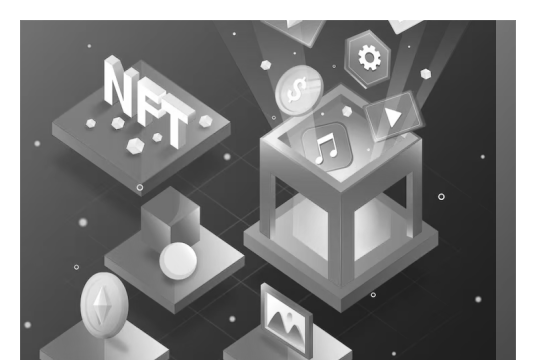
P2E Wallet Development and Integration
Wallets allow players to manage NFTs, rewards, game currencies, and blockchain transactions.
We can develop or integrate:
Embedded Gaming WalletsCustodial WalletsNon-Custodial WalletsAccount Abstraction WalletsMPC WalletsSocial Login WalletsMulti-Chain WalletsMobile WalletsWeb WalletsWalletConnectMetaMaskCoinbase WalletTrust WalletPhantomThe wallet architecture is selected according to the target users, custody model, recovery requirements, security, and blockchain networks.
/// ANTI-CHEAT
Gasless and Simplified Player Onboarding
Players should not need advanced blockchain knowledge before they can enjoy a game.
We can simplify onboarding with:
Email RegistrationSocial LoginEmbedded WalletsAccount AbstractionSponsored TransactionsMeta-TransactionsSession KeysBatched TransactionsAutomatic Network SwitchingManaged Gas FeesLayer 2 NetworksSidechainsApplication-Specific ChainsFiat Payment IntegrationPassword-Based RecoveryThese approaches can reduce seed-phrase complexity, wallet prompts, manual gas payments, and network-switching friction.
/// LOCATION
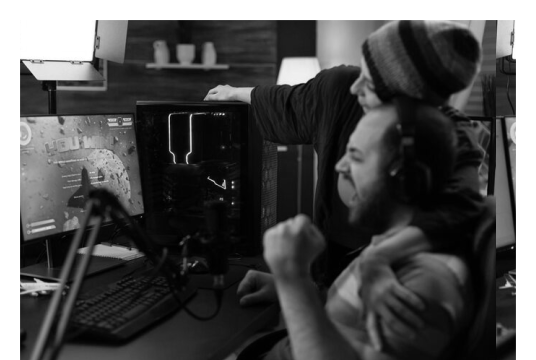
In-Game NFT Marketplace Development
A P2E marketplace enables players to manage eligible digital assets within the game ecosystem.
We can develop:
Fixed-Price ListingsAuctionsOffers and CounteroffersAsset RentalsCollection FiltersAttribute FiltersRarity FiltersPrice HistoryNFT InventoryWallet PaymentsMarketplace FeesCreator RoyaltiesEscrow SettlementTransaction HistoryAsset VerificationFraud MonitoringFiat Payment IntegrationFeatured AssetsMarketplace functionality should support gameplay and digital ownership without turning speculation into the game’s only source of engagement.
/// SOCIAL
Multiplayer P2E Game Development
We develop multiplayer systems for:
Player-versus-Player MatchesCooperative MissionsTeam-Based BattlesCompetitive TournamentsGuild WarsRanked MatchmakingShared Virtual WorldsTradingSocial HubsSpectator ModesSeasonal LeaguesCommunity EventsThe multiplayer architecture may include authoritative game servers, real-time synchronization, regional infrastructure, matchmaking, anti-cheat systems, and session management.

/// CORPORATE
Guild and Scholarship System Development
Guild systems can allow players to collaborate, share resources, participate in team activities, and manage eligible digital assets.
We can develop:
Guild CreationMember InvitationsGuild RolesShared InventoriesAsset DelegationTemporary Asset UsageTeam MissionsGuild TournamentsReward DistributionGuild TreasuriesPerformance AnalyticsCommunity VotingScholarship WorkflowsRevenue-Sharing RulesActivity MonitoringAny revenue-sharing or financial arrangement should be reviewed for applicable legal, tax, and regulatory requirements.

/// ANTI-CHEAT
Anti-Bot and Reward Fraud Prevention
P2E reward systems can attract users attempting to automate gameplay or manipulate results.
Common risks include:
Gameplay BotsMultiple AccountsAutomated Reward FarmingModified Game ClientsEmulator AbuseFake Match ResultsCoordinated Opponent AccountsDuplicate Reward ClaimsAPI ManipulationReplayed TransactionsAccount SharingAsset DuplicationExploited Game MechanicsTournament ManipulationWe can implement:
Device and Session AnalysisBehavioral Risk ScoringGameplay Pattern DetectionAccount Linking AnalysisReward LimitsDuplicate Claim DetectionServer-Side Result ValidationMatch Integrity ChecksRate LimitingSuspicious Activity ReviewsReward HoldsManual Review WorkflowsAccount RestrictionsAudit LogsFraud Monitoring DashboardsNo anti-cheat system can eliminate every form of abuse. Rules and detection systems must be monitored and improved after launch.
/// UTILITY DESIGN
P2E Game Business Models
Game and Asset Sales
Generate revenue through game access, starter assets, characters, skins, equipment, land, cards, and collectibles.
Marketplace Transaction Fees
Charge a fixed or percentage-based fee on eligible marketplace transactions.
Subscription Plans
Offer premium access, expanded features, exclusive content, analytics, or recurring player benefits.
Battle Passes
Sell seasonal access to missions, progression systems, cosmetics, and exclusive rewards.
Tournament Entry Fees
Generate revenue through competitive events, premium competitions, sponsorships, or participation fees.
Crafting and Upgrade Fees
Use game currencies or assets for crafting, repairing, combining, or upgrading digital items.
Asset Rentals
Allow eligible players or the platform to rent selected digital assets for a defined period.
Sponsored Experiences
Create branded assets, tournaments, missions, virtual environments, and promotional campaigns.
Creator Economy
Earn fees when approved creators publish and sell game assets, environments, or experiences.
Enterprise Licensing
Provide customized game technology or P2E infrastructure to studios, publishers, communities, and commercial partners.
///BENEFITS
Benefits of Custom P2E Game Development
Meaningful Digital Ownership
Allow players to own and verify selected blockchain-based game assets.
Improved Player Engagement
Use progression, missions, rewards, achievements, assets, and community activity to support long-term participation.
Multiple Revenue Opportunities
Generate revenue through assets, memberships, marketplaces, tournaments, upgrades, sponsorships, and creator programs.
Transparent Asset Scarcity
Use smart contracts to enforce the supply and issuance rules of eligible game assets.
Community Participation
Enable guilds, tournaments, governance, creators, social groups, and collaborative gameplay.
Accessible Web3 Experience
Use embedded wallets and sponsored transactions to reduce blockchain complexity for mainstream players.
Expandable Game Economy
Introduce new assets, challenges, game modes, seasons, and platform utilities as the ecosystem grows.
Complete Product Control
Own and manage the game, source code, smart contracts, digital economy, user experience, and roadmap according to the development agreement.
Allow players to own and verify selected blockchain-based game assets.
Use progression, missions, rewards, achievements, assets, and community activity to support long-term participation.
Generate revenue through assets, memberships, marketplaces, tournaments, upgrades, sponsorships, and creator programs.
Use smart contracts to enforce the supply and issuance rules of eligible game assets.
Enable guilds, tournaments, governance, creators, social groups, and collaborative gameplay.
Use embedded wallets and sponsored transactions to reduce blockchain complexity for mainstream players.
Introduce new assets, challenges, game modes, seasons, and platform utilities as the ecosystem grows.
Own and manage the game, source code, smart contracts, digital economy, user experience, and roadmap according to the development agreement.

///CHALLENGES
Common Business Challenges We Help Solve
We Help Solve
We help founders, studios, and enterprises answer questions such as:
Our gaming and blockchain specialists translate these requirements into a practical product, economic, and technical roadmap.
/// SECURITY
P2E Game Security
Play-to-Earn games may manage player accounts, wallets, valuable NFTs, rewards, marketplace payments, smart contracts, and multiplayer infrastructure.
We design systems to address risks involving:
Security controls may include:
No game or blockchain platform can be guaranteed to be completely free from fraud or security risks. Continuous monitoring, maintenance, testing, and economic analysis remain essential.
Our Play-to-Earn Game Development Process
Discovery and Feasibility Assessment
Understand your game concept, genre, audience, gameplay, platform, business model, reward objectives, and blockchain requirements.
Gameplay and Product Strategy
Define the gameplay loop, missions, player progression, digital assets, rewards, social systems, and long-term content strategy.
Game Design Document
Prepare structured documentation covering gameplay rules, characters, levels, assets, interfaces, rewards, economy, and technical scope.
Economy and Tokenomics Design
Plan game currencies, reward emissions, NFT supply, asset utility, economic sinks, fees, treasury allocation, and controls.
Technical and Blockchain Architecture
Select the game engine, blockchain network, token standards, wallet model, smart contract architecture, backend systems, and storage infrastructure.
UI/UX and Game Art Design
Create player journeys, interfaces, characters, environments, animations, effects, assets, and marketplace experiences.
Core Game Development
Build game mechanics, missions, progression, multiplayer systems, inventories, rewards, social functionality, and player controls.
Smart Contract Development
Develop contracts for NFTs, rewards, marketplaces, crafting, upgrades, staking, rentals, tournaments, or governance.
Wallet and Blockchain Integration
Connect the game with embedded wallets, external wallets, smart contracts, NFT storage, blockchain indexers, and marketplace systems.
Backend and Admin Development
Build player management, reward configuration, economy controls, analytics, moderation, fraud monitoring, and administrative tools.
Testing and Security Review
Test gameplay, multiplayer systems, reward calculations, smart contracts, wallets, marketplace activity, APIs, performance, and security.
Testnet and Closed Beta
Deploy blockchain components to a test network and release the game to selected players for gameplay and economic validation.
Mainnet and Production Launch
Deploy the approved game, smart contracts, wallets, marketplace, backend services, and production infrastructure.
Post-Launch Optimization
Monitor player engagement, reward emissions, fraud activity, marketplace health, server performance, and platform security.
Understand your game concept, genre, audience, gameplay, platform, business model, reward objectives, and blockchain requirements.
Define the gameplay loop, missions, player progression, digital assets, rewards, social systems, and long-term content strategy.
Prepare structured documentation covering gameplay rules, characters, levels, assets, interfaces, rewards, economy, and technical scope.
Plan game currencies, reward emissions, NFT supply, asset utility, economic sinks, fees, treasury allocation, and controls.
Select the game engine, blockchain network, token standards, wallet model, smart contract architecture, backend systems, and storage infrastructure.
Create player journeys, interfaces, characters, environments, animations, effects, assets, and marketplace experiences.
Build game mechanics, missions, progression, multiplayer systems, inventories, rewards, social functionality, and player controls.
Develop contracts for NFTs, rewards, marketplaces, crafting, upgrades, staking, rentals, tournaments, or governance.
Connect the game with embedded wallets, external wallets, smart contracts, NFT storage, blockchain indexers, and marketplace systems.
Build player management, reward configuration, economy controls, analytics, moderation, fraud monitoring, and administrative tools.
Test gameplay, multiplayer systems, reward calculations, smart contracts, wallets, marketplace activity, APIs, performance, and security.
Deploy blockchain components to a test network and release the game to selected players for gameplay and economic validation.
Deploy the approved game, smart contracts, wallets, marketplace, backend services, and production infrastructure.
Monitor player engagement, reward emissions, fraud activity, marketplace health, server performance, and platform security.
/// CORE FEATURES
Play-to-Earn Game Development Deliverables
Depending on the project scope, deliverables may include:
/// BLOCKCHAIN
Blockchain Networks We Work With
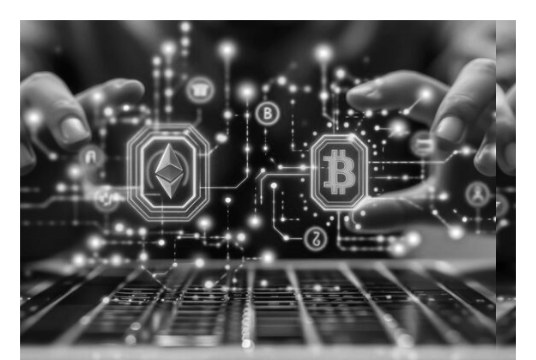
We develop Play-to-Earn games across leading blockchain ecosystems.
EthereumPolygonBaseArbitrumOptimismBNB Smart ChainAvalancheSolanaImmutableRoninAptosSuiCustom EVM NetworksLayer 2 NetworksApplication-Specific ChainsThe appropriate blockchain depends on transaction costs, throughput, wallet support, gaming infrastructure, NFT tooling, security, and anticipated user activity.
///TECHNOLOGY
Technologies We Work With


/// WHY CHOOSE US
Why Choose Sodio?

Custom P2E Game Development
We develop each game around its gameplay, audience, rewards, and business model rather than selling generic or white-label gaming software.

Gameplay-First Approach
We prioritize enjoyable gameplay and long-term player engagement before introducing blockchain rewards or financial mechanics.

Sustainable Economy Design
We design controlled reward emissions, meaningful utility, economic sinks, and monitoring systems to support long-term ecosystem health.

Gaming and Blockchain Expertise
Our team understands game engines, multiplayer systems, smart contracts, NFTs, wallets, marketplaces, tokenomics, and blockchain infrastructure.

Accessible Web3 Onboarding
We can implement embedded wallets, social login, gasless transactions, and account abstraction to reduce player friction.

Security-Focused Engineering
Security is considered across player accounts, game servers, reward systems, smart contracts, wallets, marketplace transactions, and administration.

End-to-End Product Development
We manage strategy, design, game development, blockchain integration, testing, deployment, and post-launch support.

Scalable Architecture
We design games for growing player numbers, multiplayer sessions, digital assets, transactions, seasonal content, and ecosystem expansion.

Source Code Ownership
The agreed game code, smart contracts, documentation, and deployment assets can be delivered according to the development agreement.

Long-Term Technology Partnership
We support game updates, new assets, seasonal content, reward adjustments, smart contract upgrades, security improvements, and performance optimization.
We develop each game around its gameplay, audience, rewards, and business model rather than selling generic or white-label gaming software.
We prioritize enjoyable gameplay and long-term player engagement before introducing blockchain rewards or financial mechanics.
We design controlled reward emissions, meaningful utility, economic sinks, and monitoring systems to support long-term ecosystem health.
Our team understands game engines, multiplayer systems, smart contracts, NFTs, wallets, marketplaces, tokenomics, and blockchain infrastructure.
We can implement embedded wallets, social login, gasless transactions, and account abstraction to reduce player friction.
Security is considered across player accounts, game servers, reward systems, smart contracts, wallets, marketplace transactions, and administration.
We manage strategy, design, game development, blockchain integration, testing, deployment, and post-launch support.
We design games for growing player numbers, multiplayer sessions, digital assets, transactions, seasonal content, and ecosystem expansion.
The agreed game code, smart contracts, documentation, and deployment assets can be delivered according to the development agreement.
We support game updates, new assets, seasonal content, reward adjustments, smart contract upgrades, security improvements, and performance optimization.
/// FAQ
Frequently Asked Questions
A Play-to-Earn game rewards eligible players with points, game assets, NFTs, benefits, or supported tokens for verified gameplay and achievements.
Play-to-Earn is one type of GameFi model. GameFi can also include digital ownership, marketplaces, staking, governance, crafting, lending, rentals, and creator economies.
No. A game can use points, NFTs, badges, memberships, vouchers, or game assets without issuing its own cryptocurrency.
Rewards may be linked to missions, achievements, competitions, tournaments, progression, crafting, community participation, or other verified game actions.
Yes. We can help refine the concept, prepare the Game Design Document, design the economy, select the technology, and develop the complete product.
Characters, weapons, skins, equipment, cards, land, vehicles, collectibles, achievements, passes, and other selected assets can be represented as NFTs.
Yes. Embedded wallets, social login, email-based registration, and account abstraction can provide a familiar onboarding experience.
Yes. Sponsored transactions, session keys, meta-transactions, batching, and Layer 2 networks can reduce direct gas-payment friction.
Yes. We can build an in-game marketplace with listings, auctions, offers, rentals, fees, and supported asset transfers.
Yes. We develop real-time and turn-based multiplayer games with matchmaking, guilds, tournaments, rankings, and cooperative modes.
Yes. We can assess an existing game and integrate compatible reward systems, NFTs, wallets, smart contracts, and marketplaces.
We can use server-side validation, behavioral analysis, device signals, reward limits, duplicate detection, match-integrity checks, and manual review workflows.
No. No anti-bot system can eliminate every form of abuse. Detection rules require continuous monitoring and improvement.
Yes. We help design game currencies, rewards, NFT supply, sinks, fees, crafting costs, staking utility, and treasury controls.
No. Sodio does not guarantee token prices, NFT values, reward value, marketplace liquidity, player profitability, or investment returns.
The right blockchain depends on transaction costs, throughput, wallet support, NFT tooling, ecosystem adoption, security, and gameplay requirements.
The cost depends on the game genre, platforms, artwork, multiplayer complexity, smart contracts, wallets, marketplace features, and reward system.
A focused MVP may take several months. A complex multiplayer P2E game with custom artwork, marketplaces, wallets, and advanced economic systems usually requires a phased roadmap.
We perform internal testing and security review. Independent third-party audits may also be recommended for production contracts managing valuable assets.
Source code ownership and licensing are defined in the development agreement. Sodio can deliver the agreed game code, smart contracts, documentation, and deployment resources.
Yes. We provide monitoring, new content, reward adjustments, economic balancing, smart contract upgrades, security improvements, and performance optimization.
READY TO PLAN YOUR WEB3 GAME?
Build a Play-to-Earn Game Players Enjoy Beyond the Rewards
Whether you are creating an RPG, strategy game, trading-card platform, multiplayer world, sports game, or social gaming ecosystem, Sodio can help you build a custom P2E product from the ground up.
Launch an engaging game with meaningful digital ownership, accessible Web3 onboarding, secure reward systems, and an economy designed around sustainable gameplay.