

Turn Your Web3 Game Idea into a Practical Product and Development Roadmap
Validate your game concept, blockchain architecture, NFT utility, tokenomics, wallet experience, security requirements, and launch strategy before committing to full-scale development. Sodio provides Web3 game consulting services for founders, studios, brands, and enterprises planning new blockchain games or improving existing gaming ecosystems.


TRUSTED BY TEAMS







/// INTRODUCTIONS
What is Web3 Game Consulting?
Web3 game consulting helps founders and development teams make informed product, technical, economic, and operational decisions before or during blockchain game development.
 Traditional game mechanicsBlockchain-based ownershipNFT assetsGaming walletsDigital marketplacesGame currenciesSmart contractsReward systemsMultiplayer infrastructureCommunity governanceCreator economiesCross-chain functionality
Adding blockchain to a game introduces decisions that do not exist in conventional game development.
Whether the game genuinely needs blockchainWhich assets should be tokenizedWhich activities should happen on-chainHow players will create and recover walletsHow rewards will be distributedHow the game economy will remain sustainableHow smart contracts and digital assets will be securedWhich features should be included in the first releaseSodio helps transform an initial game concept into a structured plan covering gameplay, blockchain architecture, NFT utility, economic design, development priorities, security, and launch readiness.

///SERVICES
Our Web3 Game Consulting Services

Web3 Game Concept Consulting
Evaluate and refine your game idea, target audience, gameplay model, platform strategy, blockchain requirements, and commercial objectives.

Blockchain Feasibility Assessment
Determine whether blockchain provides meaningful value to the game or creates unnecessary technical and user-experience complexity.

Web3 Game Product Strategy
Define the game's positioning, core player experience, progression systems, ownership mechanics, monetization, and long-term roadmap.

Game Design Consulting
Structure the gameplay loop, missions, progression, rewards, characters, assets, levels, social systems, and player-retention mechanics.

Blockchain Architecture Consulting
Plan how the game engine, backend, smart contracts, wallets, blockchain networks, storage, indexers, and marketplaces should work together.

NFT Utility Consulting
Identify which game assets should become NFTs and define how ownership, transfers, upgrades, crafting, rentals, and marketplace activity should function.

Game Economy and Tokenomics Consulting
Design game currencies, reward systems, NFT supply, economic sinks, marketplace fees, treasury structures, and inflation controls.

Gaming Wallet Strategy
Select the appropriate custodial, non-custodial, embedded, MPC, or account-abstraction wallet architecture for your players.

Smart Contract Planning
Define the contracts required for assets, rewards, marketplaces, crafting, staking, tournaments, rentals, governance, and other blockchain workflows.

Blockchain Network Selection
Compare suitable blockchain networks based on transaction costs, throughput, gaming infrastructure, wallet support, ecosystem maturity, security, and scalability.
Web3 Game Security Consulting
Identify security risks across smart contracts, wallets, game servers, marketplaces, rewards, player accounts, and administrative systems.
Existing Web3 Game Audit and Improvement
Review an existing game's product experience, blockchain architecture, tokenomics, smart contracts, wallets, wallet onboarding, performance, and security.
Evaluate and refine your game idea, target audience, gameplay model, platform strategy, blockchain requirements, and commercial objectives.
Determine whether blockchain provides meaningful value to the game or creates unnecessary technical and user-experience complexity.
Define the game's positioning, core player experience, progression systems, ownership mechanics, monetization, and long-term roadmap.
Structure the gameplay loop, missions, progression, rewards, characters, assets, levels, social systems, and player-retention mechanics.
Plan how the game engine, backend, smart contracts, wallets, blockchain networks, storage, indexers, and marketplaces should work together.
Identify which game assets should become NFTs and define how ownership, transfers, upgrades, crafting, rentals, and marketplace activity should function.
Design game currencies, reward systems, NFT supply, economic sinks, marketplace fees, treasury structures, and inflation controls.
Select the appropriate custodial, non-custodial, embedded, MPC, or account-abstraction wallet architecture for your players.
Define the contracts required for assets, rewards, marketplaces, crafting, staking, tournaments, rentals, governance, and other blockchain workflows.
Compare suitable blockchain networks based on transaction costs, throughput, gaming infrastructure, wallet support, ecosystem maturity, security, and scalability.
Identify security risks across smart contracts, wallets, game servers, marketplaces, rewards, player accounts, and administrative systems.
Review an existing game's product experience, blockchain architecture, tokenomics, smart contracts, wallets, wallet onboarding, performance, and security.

/// CONSULTING
Who Needs Web3 Game Consulting?
Our consulting services are suitable for:
Game founders with an early-stage conceptTraditional studios entering Web3Blockchain companies developing gamesBrands creating interactive digital experiencesNFT projects expanding into gamingMetaverse platforms adding gameplayGaming communities launching owned ecosystemsInvestors evaluating a Web3 gaming opportunityEnterprises building training or loyalty gamesTeams experiencing tokenomics or retention problemsExisting games planning blockchain migrationProjects preparing for development or fundraisingConsulting can be used as a standalone engagement or as the first phase of a complete development project.
//////CORE FEATURES
Web3 Gaming Solutions We Consult On
We provide product and technical consulting for:


/// FEASIBILITY
Web3 Game Feasibility Assessment
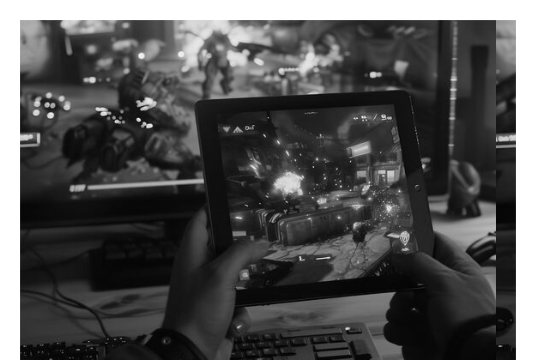
Product Feasibility
We examine:
Key product metrics and core loop details:
Target audienceCore gameplayPlayer motivationBlockchain familiarityOwnership requirementsAsset utilityRetention modelMonetization strategyCompetitive positioningLong-term content needsOwnership requirements, Asset utility, Retention model, Monetization strategy, Competitive positioning, Long-term content needs
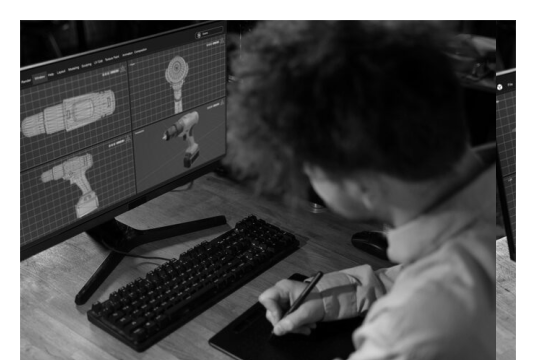
Technical Feasibility
We evaluate:
Game engine compatibilityBlockchain network optionsTransaction frequencySmart contract requirementsWallet integrationMultiplayer architectureBackend infrastructureAsset storageSecurity requirementsScalability expectationsMultiplayer architecture, Backend infrastructure, Asset storage, Security requirements, Scalability expectations

Economic Feasibility
We assess:
Reward sustainabilityNFT supplyMarket demandEconomic sinksToken utilityTreasury requirementsPlayer acquisition assumptionsRevenue sourcesOperating costsEconomic risks
Operational Feasibility
We consider:
Team capabilitiesContent productionModerationCommunity managementLive operationsCustomer supportFraud monitoringSecurity maintenanceRegulatory considerationsPost-launch developmentThe assessment helps determine whether the product should proceed as a Web3 game, use a limited blockchain layer, or remain primarily conventional.
///COMPARE
Blockchain Use-Case Assessment
Not every game needs NFTs, tokens, or fully decentralized systems.
Blockchain may provide value when:
- Verifiable digital ownership
- Tradable game assets
- Transparent asset supply
- Player-controlled wallets
- Cross-platform asset recognition
- Marketplace settlement
- Community governance
- Programmable revenue distribution
- Verifiable achievements
- Token-gated experiences
Blockchain may add limited value when:
- Assets never leave the game
- Players do not benefit from external ownership
- Transactions occur too frequently for on-chain processing
- Wallet onboarding would damage conversion
- The game depends on strict centralized control
- Tokenization creates unnecessary economic risk
- A database can provide the required functionality more efficiently
Our recommendations are based on product requirements rather than assuming every game should use blockchain.

/// PRODUCT STRATEGY
Game Concept and Product Strategy
A strong Web3 game needs a clear player experience before it needs a token or NFT marketplace.
We help define:
Game GenreTarget PlayersCore Gameplay LoopPlayer MotivationCompetitive PositioningGame WorldCharacters and AvatarsMissions and ChallengesPlayer ProgressionSocial SystemsDigital OwnershipReward MechanicsMonetizationContent RoadmapLaunch PrioritiesThe goal is to create a product users would enjoy even without speculative rewards.

/// GAMEPLAY
Gameplay Loop Consulting
The gameplay loop defines what players repeatedly do and why they return.
We help structure loops involving:
ExplorationCombatResource CollectionCraftingTradingCharacter DevelopmentAsset UpgradesCompetitive MatchesCooperative MissionsTournamentsSocial InteractionLand DevelopmentCollection BuildingAchievement CompletionSeasonal ProgressionFor each loop, we assess:
Player actionSkill or decision requiredImmediate feedbackRewardProgressionResource consumptionReplayabilityEconomic impactBlockchain features are then connected only to suitable points in the gameplay loop.

/// NFT STRATEGY
NFT Strategy and Utility Consulting
NFTs should provide clear utility within the game rather than exist only as tradable collectibles.
We help determine which assets should be tokenized, including:
CharactersAvatarsWeaponsEquipmentSkinsWearablesTrading CardsVirtual LandVehiclesCollectiblesMembership PassesEvent TicketsAchievementsCreator AssetsFor each NFT type, we define:
Asset purposeSupplyRarityMinting methodOwnership rightsGameplay utilityTransfer rulesUpgrade mechanicsMetadata structureStorage modelMarketplace eligibilityNot every in-game item should be an NFT. High-frequency resources, temporary states, common consumables, and non-transferable data may be better managed through the game database.
/// TOKEN STANDARDS
NFT Standard Selection
We develop tokens using the official TRON blockchain standards.
ERC-721
Suitable for individually unique assets such as rare characters, land parcels, special weapons, and one-of-one collectibles.
ERC-1155
Suitable for games managing multiple asset types, editions, quantities, resources, tickets, and equipment through a more flexible structure.
ERC-2981
Can be used to communicate royalty information to compatible applications and marketplaces.
Soulbound Tokens
Suitable for non-transferable achievements, reputations, certifications, memberships, and player credentials.
Dynamic NFTs
Suitable for characters and assets that evolve according to progression, upgrades, achievements, or game events.
Custom Standards
Custom logic may be required for rentals, crafting, equipment compatibility, restricted transfers, asset durability, or other game-specific functions.

/// ECONOMY
Game Economy and Tokenomics Consulting
A Web3 game economy must balance player rewards, asset utility, supply, demand, progression, and revenue.
We help define:
Game Currency StructureNFT SupplyAsset RarityReward EmissionPlayer ProgressionMarketplace FeesCrafting CostsUpgrade CostsRepair MechanicsAsset DurabilityTournament EntryMembership UtilityStaking FunctionsTreasury AllocationCreator RevenueGuild RewardsEconomic SinksInflation ControlsOur consulting focuses on gameplay utility and economic sustainability rather than assuming token appreciation or continuous marketplace growth.
No tokenomics framework can guarantee token value, NFT prices, liquidity, player adoption, or financial returns.
/// TOKEN MODEL
Does Your Game Need a Token?
A native token is not required for every blockchain game.
Token-Free Model
The game can use points, conventional balances, NFTs, memberships, vouchers, or partner rewards without launching a cryptocurrency.
Single-Token Model
One token may support rewards, marketplace payments, upgrades, staking, and governance.
Dual-Token Model
Separate assets may be used for governance and high-frequency game activity.
/// REWARDS
Sustainable Reward Model Consulting
Reward systems can fail when issuance grows faster than player demand or asset consumption.
We help design reward models using:
Controlled Reward EmissionPlayer Eligibility RulesDaily and Seasonal LimitsSkill-Based RewardsProgression RequirementsTournament RewardsAsset CraftingUpgrade CostsRepair CostsEntry RequirementsReward ExpirationMembership UtilityCosmetic SpendingPartner-Funded BenefitsTreasury ControlsEconomic MonitoringRewards can include:
Experience PointsOff-Chain Game CurrencyNFT AssetsMembership BenefitsAccess RightsCollectiblesPartner RewardsSupported Blockchain Tokens
/// BLOCKCHAIN
Blockchain Network Consulting
Selecting a blockchain affects transaction costs, wallet compatibility, performance, security, and development complexity.
We assess networks based on:
Transaction FeesConfirmation SpeedThroughputGaming EcosystemNFT InfrastructureWallet SupportSmart Contract CapabilitiesDeveloper ToolingIndexing ServicesSecurity ModelDecentralizationBridge RequirementsLong-Term Ecosystem SupportNetworks considered may include:
EthereumPolygonBaseArbitrumOptimismBNB Smart ChainAvalancheSolanaImmutableRoninAptosSuiCustom EVM NetworksApplication-Specific ChainsLayer 2 Networks/// ARCHITECTURE
On-Chain and Off-Chain Architecture Consulting
One of the most important decisions is determining which processes should happen on-chain. We generally recommend a hybrid architecture that combines efficient game servers with blockchain-based ownership and settlement.
Activities That May Be Suitable On-Chain
Activities Usually Better Managed Off-Chain

/// WALLETS
Gaming Wallet Consulting
The wallet experience can significantly affect player onboarding and retention.
We help assess:
Custodial WalletsNon-Custodial WalletsEmbedded WalletsAccount AbstractionMPC WalletsSocial Login WalletsMulti-Chain WalletsExternal Wallet ConnectionsSocial RecoveryPassword-Based RecoveryWallet planning includes:
Account creationPrivate-key managementRecoveryTransaction signingGas managementSession permissionsAsset displayNetwork switchingSecurity warningsRegulatory considerations
/// GASLESS
Gasless Transaction Strategy
Frequent blockchain prompts and gas payments can interrupt gameplay.
We evaluate approaches such as:
Sponsored TransactionsMeta-TransactionsAccount AbstractionSession KeysBatched TransactionsRelayer InfrastructureLayer 2 NetworksApplication-Specific ChainsDelayed SettlementOff-Chain Game ActionsThe recommended approach depends on transaction volume, security, network support, user expectations, and operational cost.
/// SMART CONTRACTS
Web3 Game Smart Contract Planning
Before development begins, we define the smart contract system required by the product.
Contracts may include:
NFT Minting ContractsMarketplace ContractsReward ContractsCrafting ContractsUpgrade ContractsStaking ContractsRental ContractsTournament ContractsGovernance ContractsTreasury ContractsRevenue Distribution ContractsAccess-Control ContractsFor each contract, we can document:
PurposeUser rolesPermissionsFunctionsData structureUpgrade requirementsExternal dependenciesFailure conditionsAdministrative controlsTesting requirementsAudit requirementsThis helps reduce ambiguity, unnecessary contract complexity, and development rework.

/// MARKETPLACE
In-Game Marketplace Consulting
We help define marketplace functionality that supports the game economy without making speculation the primary experience.
Marketplace planning may cover:
Fixed-Price ListingsAuctionsOffersAsset RentalsCollection FiltersRarity FiltersPrice HistoryEscrowPlatform FeesCreator RoyaltiesAsset VerificationFiat PaymentsWe also assess whether the marketplace should be:
Fully on-chainPartially on-chainCustodialNon-custodialInternal to the gameConnected to external platformsWallet PaymentsFraud MonitoringRegional Restrictions
/// INFRASTRUCTURE
Multiplayer and Backend Architecture Consulting
Web3 does not replace the need for reliable gaming infrastructure.
We provide guidance on:
Authoritative Game ServersReal-Time SynchronizationTurn-Based ArchitectureMatchmakingSession ManagementRegional DeploymentPlayer InventoriesGame-State ManagementLeaderboardsNotificationsAnti-Cheat SystemsAnalyticsContent ManagementAdministrative ControlsBlockchain Event ProcessingThe architecture should support the game's expected player volume, latency requirements, transaction activity, and content roadmap.
/// STORAGE
Asset Storage and Metadata Consulting
Web3 games may need to store images, animations, audio, 3D models, videos, metadata, and gameplay attributes.
We help evaluate:
IPFSArweaveFilecoinCloud StorageContent Delivery NetworksOn-Chain MetadataHybrid StorageOur recommendations consider:
PermanenceCostPerformancePrivacyFile SizeUpdate RequirementsDynamic MetadataContent ModerationBackup and RecoveryGlobal DeliveryLarge game assets may require conventional delivery infrastructure even when ownership and content hashes are recorded on-chain.

/// DYNAMIC NFT
Dynamic NFT Consulting
Dynamic NFTs can change according to verified gameplay and player progression.
We help define:
Update triggersAuthorized data sourcesMetadata architectureUpgrade rulesVisual changesTrait progressionGame-server permissionsSmart contract validationVersion historyFailure recoveryDynamic changes may be triggered by:
Player LevelsExperience PointsCompleted MissionsBattle ResultsEquipmentAchievementsTournament RankingsSeasonal EventsAsset UsageOwnership History
/// INTEROPERABILITY
Cross-Game and Multi-Chain Consulting
Cross-game and multi-chain functionality can add flexibility but also increases complexity.
We evaluate:
Whether interoperability provides real player valueShared ownership recognitionCommon metadata standardsGame-engine compatibilityAsset balancingCross-chain messagingNFT bridgesToken bridgesUnified wallet experiencesSecurity risksLiquidity fragmentationOperational overheadOwning an NFT does not automatically make it usable across games. Each participating game must intentionally support the asset's visual format, metadata, abilities, and gameplay rules.
/// SECURITY
Web3 Game Security Consulting
Web3 games combine gaming risks with blockchain, wallet, and smart contract risks.
We assess threats involving:
Security recommendations may include:
No game or blockchain system can be guaranteed to be completely risk-free. Security must be treated as an ongoing operational responsibility.

/// ANTI-BOT
Anti-Bot and Economic Abuse Consulting
Reward-based games can attract automated users and coordinated abuse.
We help plan controls for:
Gameplay BotsMulti-Account FarmingEmulator AbuseModified ClientsFake MatchesCoordinated Opponent AccountsDuplicate ClaimsAccount SharingAsset DuplicationReward FarmingMarketplace ManipulationTournament FraudRecommended controls may include:
Server-Side Result ValidationDevice AnalysisBehavioural Risk ScoringReward LimitsMatch-Integrity ChecksAccount-Linking AnalysisSuspicious Activity HoldsManual Review WorkflowsProgressive RestrictionsMonitoring Dashboards
/// REGULATORY
Regulatory and Risk Considerations
Web3 games may involve tokens, digital assets, marketplaces, rewards, payments, user-generated content, or financial-style mechanics.
Consulting may identify areas requiring specialist legal review, including:
Token ClassificationGaming and Gambling RulesPrize CompetitionsFinancial PromotionsConsumer ProtectionPayment ProcessingTaxationData PrivacyChildren's SafetyIntellectual PropertyMarketplace TermsUser-Generated ContentSanctions and Restricted RegionsKYC and AML RequirementsSodio provides product and technology consulting, not legal, tax, investment, or regulatory advice. Appropriate specialists should review the product for its intended jurisdictions.

/// MVP
Web3 Game MVP Consulting
A Web3 game MVP should validate the core player experience without attempting to build the entire ecosystem at once.
We help prioritize:
Core Gameplay LoopInitial Game ModePlayer RegistrationBasic Wallet ExperienceLimited NFT UtilityStarter Asset CollectionInventoryEssential Smart ContractsReward LogicBasic MarketplaceAdmin ControlsAnalyticsTestnet DeploymentClosed BetaFeatures such as multi-chain support, DAO governance, advanced staking, cross-game interoperability, and complex creator economies can often be introduced after the core game has been validated.
/// DELIVERABLES
Typical Web3 Game Consulting Deliverables
Depending on the engagement, deliverables may include:
/// Our Web3 Game Consulting Process
Initial Discovery
Understand your game idea, audience, business objectives, current development stage, and consulting priorities.
Product and Gameplay Review
Evaluate the game concept, core mechanics, progression systems, player incentives, and how blockchain may improve or complicate the experience.
Blockchain Feasibility Assessment
Assess whether NFTs, tokens, on-chain assets, or decentralized infrastructure are appropriate for the product, and identify where blockchain adds measurable value.
NFT and Asset Strategy
Define which in-game items should be NFTs, how they are minted, traded, upgraded, and what standards, metadata, and storage requirements apply.
Economy and Reward Assessment
Review the proposed game economy including currency flow, reward emissions, sinks, marketplace fees, and token utility to identify risks and sustainability issues.
Technical Architecture
Recommend the blockchain network, wallet solution, smart contract structure, off-chain systems, storage layer, and infrastructure needed to support the game.
Security and Risk Review
Identify security risks across smart contracts, wallets, marketplace transactions, server infrastructure, and administrative operations, with recommended mitigations.
MVP and Development Roadmap
Define the minimum viable product scope, development phases, feature priorities, team requirements, and estimated timelines.
Documentation and Recommendations
Deliver a consulting report covering findings, architecture diagrams, economy models, security recommendations, and an actionable development plan.
Implementation Support
Provide ongoing advisory, development oversight, architecture reviews, and technical guidance during and after implementation.
Understand your game idea, audience, business objectives, current development stage, and consulting priorities.
Evaluate the game concept, core mechanics, progression systems, player incentives, and how blockchain may improve or complicate the experience.
Assess whether NFTs, tokens, on-chain assets, or decentralized infrastructure are appropriate for the product, and identify where blockchain adds measurable value.
Define which in-game items should be NFTs, how they are minted, traded, upgraded, and what standards, metadata, and storage requirements apply.
Review the proposed game economy including currency flow, reward emissions, sinks, marketplace fees, and token utility to identify risks and sustainability issues.
Recommend the blockchain network, wallet solution, smart contract structure, off-chain systems, storage layer, and infrastructure needed to support the game.
Identify security risks across smart contracts, wallets, marketplace transactions, server infrastructure, and administrative operations, with recommended mitigations.
Define the minimum viable product scope, development phases, feature priorities, team requirements, and estimated timelines.
Deliver a consulting report covering findings, architecture diagrams, economy models, security recommendations, and an actionable development plan.
Provide ongoing advisory, development oversight, architecture reviews, and technical guidance during and after implementation.
/// EXISTING GAMES
Consulting for Existing Web3 Games
We also assess games that have already entered development or launched.
Our review can cover:
Gameplay and RetentionNFT UtilityTokenomicsReward InflationWallet OnboardingSmart Contract ArchitectureBlockchain CostsMarketplace ActivityPlayer ConversionServer PerformanceAnti-Bot ControlsSecurityScalabilityTechnical DebtProduct RoadmapThe result is a prioritized improvement plan based on product impact, risk, effort, and technical dependency.

///CHALLENGES
Common Business Challenges
We Help Solve
We help founders and teams answer questions such as:
Our consulting engagement converts these questions into documented product and technical decisions.
///BENEFITS
Benefits of Web3 Game Consulting
Validate Before Building
Identify product, technical, economic, and security issues before committing to full-scale development.
Reduce Development Rework
Create clearer requirements and architecture to reduce avoidable changes during implementation.
Prioritize the Right MVP
Focus the first release on the gameplay and blockchain features required to test the product.
Improve Player Experience
Design wallet, transaction, ownership, and reward experiences around mainstream gaming expectations.
Build a Sustainable Economy
Plan asset supply, reward emissions, utility, sinks, and marketplace fees before launch.
Make Better Technology Decisions
Select the game engine, blockchain, wallet architecture, storage, and infrastructure according to actual requirements.
Identify Security Risks Early
Address smart contract, marketplace, wallet, server, and economic risks during planning.
Create an Actionable Roadmap
Give internal teams, development partners, and stakeholders a shared plan for execution.
Identify product, technical, economic, and security issues before committing to full-scale development.
Create clearer requirements and architecture to reduce avoidable changes during implementation.
Focus the first release on the gameplay and blockchain features required to test the product.
Design wallet, transaction, ownership, and reward experiences around mainstream gaming expectations.
Plan asset supply, reward emissions, utility, sinks, and marketplace fees before launch.
Select the game engine, blockchain, wallet architecture, storage, and infrastructure according to actual requirements.
Address smart contract, marketplace, wallet, server, and economic risks during planning.
Give internal teams, development partners, and stakeholders a shared plan for execution.
///WHY CHOOSE US
Why Choose Sodio for Web3 Game Consulting?

Gaming and Blockchain Expertise
Our team understands game development, NFTs, smart contracts, wallets, marketplaces, multiplayer infrastructure, and digital economies.

Product-First Recommendations
We begin with player experience and business objectives rather than recommending blockchain features without clear utility.

Practical Blockchain Architecture
We help determine what should be on-chain, what should remain off-chain, and how both systems should work together.

Custom Consulting Engagements
The consulting scope is structured around your product stage, challenges, team, and intended deliverables.

Economy and Tokenomics Understanding
We evaluate reward issuance, game utility, asset supply, sinks, fees, treasury requirements, and long-term sustainability.

Security-Focused Planning
Security considerations are incorporated into smart contracts, wallets, game servers, marketplaces, and administrative operations.

End-to-End Development Capability
After consulting, Sodio can support UI/UX, game development, smart contracts, wallet integration, backend systems, testing, deployment, and maintenance.

Independent Technology Recommendations
We recommend networks, standards, wallets, and architecture based on product requirements rather than forcing a predetermined technology stack.

Long-Term Product Support
We can continue supporting roadmap refinement, development oversight, security improvements, economic balancing, and platform expansion.
Our team understands game development, NFTs, smart contracts, wallets, marketplaces, multiplayer infrastructure, and digital economies.
We begin with player experience and business objectives rather than recommending blockchain features without clear utility.
We help determine what should be on-chain, what should remain off-chain, and how both systems should work together.
The consulting scope is structured around your product stage, challenges, team, and intended deliverables.
We evaluate reward issuance, game utility, asset supply, sinks, fees, treasury requirements, and long-term sustainability.
Security considerations are incorporated into smart contracts, wallets, game servers, marketplaces, and administrative operations.
After consulting, Sodio can support UI/UX, game development, smart contracts, wallet integration, backend systems, testing, deployment, and maintenance.
We recommend networks, standards, wallets, and architecture based on product requirements rather than forcing a predetermined technology stack.
We can continue supporting roadmap refinement, development oversight, security improvements, economic balancing, and platform expansion.
/// FAQ
Frequently Asked Questions
Web3 game consulting helps teams plan or improve blockchain-integrated games by evaluating gameplay, NFTs, economy design, smart contracts, wallets, marketplace mechanics, security, and technical architecture before or during development.
Founders, traditional game studios, blockchain developers, and enterprises looking to integrate tokenomics or player-owned economies safely.
A comprehensive review covering feasibility, chain selection, asset architecture, economic design, security, and MVP scoping.
Ideally during early conceptualization or before writing production smart contracts.
Consulting focuses on strategy, architecture, and planning, whereas development builds the actual game code and smart contracts.
Networks like Polygon, Arbitrum, Base, Immutable, and Ronin are popular due to low fees and high throughput.
We analyze whether true digital ownership, decentralized economies, or player-driven markets genuinely enhance the core gameplay.
ERC-721, ERC-1155, Soulbound tokens, Dynamic NFTs, and custom standards.
Yes, we analyze supply emission, sink mechanisms, and inflationary risks.
Planning architecture, access controls, minting rules, and security workflows.
We advise on embedded wallets, account abstraction, and social logins to minimize Web3 friction.
Smart contract vulnerabilities, exploit vectors, bot farming, and administrative key compromise.
Yes, we audit live tokenomics, player retention bottlenecks, and smart contract security.
Yes, Sodio offers full end-to-end software and blockchain development.
Detailed requirement documents, architecture blueprints, tokenomics frameworks, and actionable roadmaps.
Timelines range from 2 to 6 weeks depending on game scope and complexity.
We provide objective recommendations tailored to your game engine (Unity, Unreal) and performance goals.
Yes, by avoiding costly architectural rework and flawed token designs early.
We provide modular consulting engagements tailored to specific problem areas.
Book a free initial consultation call with our Web3 gaming experts to discuss your project.
READY TO PLAN YOUR WEB3 GAME?
Plan Your Web3 Game Before You Build It
Whether you have an early-stage game idea, an existing Game Design Document, a traditional game ready for blockchain integration, or a launched Web3 ecosystem facing technical and economic challenges, Sodio can help you define a clearer path forward.
Validate the gameplay, blockchain utility, NFT strategy, tokenomics, architecture, security, and MVP scope with an actionable consulting roadmap.