

Build Immersive Web3 Metaverse Games with Player-Owned Digital Economies
Create an interactive virtual world where players can explore, compete, socialize, own digital assets, trade NFTs, and participate in a connected gaming economy. Sodio develops custom Web3 Metaverse GameFi platforms with immersive environments, multiplayer gameplay, avatars, virtual land, NFT marketplaces, embedded wallets, smart contracts, and scalable blockchain infrastructure.


TRUSTED BY TEAMS







/// INTRODUCTIONS
What Is Web3 Metaverse GameFi Development?
Web3 Metaverse GameFi development combines immersive virtual environments, blockchain gaming, digital ownership, and decentralized financial mechanics within a connected platform.
These ecosystems allow users to participate through digital avatars while interacting with gameplay, social spaces, virtual land, tokenized assets, marketplaces, events, and community-driven experiences.
A Web3 Metaverse GameFi platform may include:
 Immersive 3D virtual worldsCustomizable player avatarsMultiplayer gameplayNFT-based game assetsVirtual land ownershipIn-game marketplacesDigital walletsGame currencies and tokensAsset crafting and upgradesPlayer rewardsGuilds and communitiesDecentralized governanceVirtual eventsCreator economy tools
Unlike conventional games where digital items remain controlled entirely by the publisher, Web3 gaming can give players verifiable ownership of selected assets through blockchain technology.
At Sodio, we develop custom Web3 Metaverse GameFi platforms from the ground up. We focus first on engaging gameplay and meaningful user experiences, integrating blockchain only where it provides practical ownership, utility, transparency, or ecosystem value.

///SERVICES
Our Web3 Metaverse GameFi Development Services

Custom GameFi Platform Development
Build a complete GameFi ecosystem tailored to your game concept, target audience, gameplay mechanics, asset model, and monetization strategy.

Metaverse Game Development
Create interactive virtual worlds where users can explore environments, complete missions, interact with other players, attend events, and manage digital assets.

Multiplayer Web3 Game Development
Develop real-time or turn-based multiplayer experiences with matchmaking, competitive modes, cooperative missions, tournaments, guilds, leaderboards, and social interactions.

NFT Game Asset Development
Represent selected characters, weapons, skins, land, vehicles, collectibles, equipment, and rewards as blockchain-based digital assets.

GameFi Smart Contract Development
Develop smart contracts for NFT minting, marketplace transactions, asset ownership, staking, rewards, crafting, upgrades, rentals, tournaments, and governance.

Virtual Land Development
Create virtual land systems that allow users to acquire, develop, rent, trade, customize, or monetize digital spaces within the metaverse.

Avatar Creation and Customization
Develop 2D or 3D avatars with customizable appearances, clothing, accessories, equipment, animations, NFT wearables, and gameplay-linked attributes.

In-Game NFT Marketplace Development
Build a marketplace where players and creators can list, purchase, sell, auction, rent, and exchange supported game assets.

GameFi Wallet Development
Create embedded, custodial, non-custodial, MPC, or account-abstraction-based wallets for managing NFTs, tokens, rewards, and marketplace transactions.

Game Economy and Tokenomics Design
Design game currencies, NFT supply, rewards, sinks, marketplace fees, asset rarity, staking utility, treasury allocation, and economic controls.

DAO and Community Governance
Build governance systems that allow eligible players, guilds, token holders, or asset owners to participate in selected ecosystem decisions.

Existing Game Web3 Integration
Add NFT ownership, wallets, marketplaces, smart contracts, tokens, and blockchain-based rewards to a compatible existing game.
Build a complete GameFi ecosystem tailored to your game concept, target audience, gameplay mechanics, asset model, and monetization strategy.
Create interactive virtual worlds where users can explore environments, complete missions, interact with other players, attend events, and manage digital assets.
Develop real-time or turn-based multiplayer experiences with matchmaking, competitive modes, cooperative missions, tournaments, guilds, leaderboards, and social interactions.
Represent selected characters, weapons, skins, land, vehicles, collectibles, equipment, and rewards as blockchain-based digital assets.
Develop smart contracts for NFT minting, marketplace transactions, asset ownership, staking, rewards, crafting, upgrades, rentals, tournaments, and governance.
Create virtual land systems that allow users to acquire, develop, rent, trade, customize, or monetize digital spaces within the metaverse.
Develop 2D or 3D avatars with customizable appearances, clothing, accessories, equipment, animations, NFT wearables, and gameplay-linked attributes.
Build a marketplace where players and creators can list, purchase, sell, auction, rent, and exchange supported game assets.
Create embedded, custodial, non-custodial, MPC, or account-abstraction-based wallets for managing NFTs, tokens, rewards, and marketplace transactions.
Design game currencies, NFT supply, rewards, sinks, marketplace fees, asset rarity, staking utility, treasury allocation, and economic controls.
Build governance systems that allow eligible players, guilds, token holders, or asset owners to participate in selected ecosystem decisions.
Add NFT ownership, wallets, marketplaces, smart contracts, tokens, and blockchain-based rewards to a compatible existing game.
///SOLUTIONS
Web3 Metaverse GameFi Solutions We Develop
We develop platforms for different genres, communities, and commercial models.


/// FEATURES
Core GameFi Platform Features
Every platform is customized around its gameplay, users, and economic structure.
Player Features
Gameplay Features
Web3 Features
///METAVERSE
Metaverse Features We Develop

Immersive Virtual Environments
Create interactive 3D environments such as cities, kingdoms, arenas, islands, campuses, stores, stadiums, galleries, and entertainment zones.
Persistent Virtual Worlds
Develop environments that continue to exist and evolve as users, events, assets, and communities interact with the platform.

Social Interaction
Enable players to communicate through text, voice, emotes, groups, guilds, private spaces, public areas, and virtual events.

Virtual Events
Host concerts, tournaments, exhibitions, product launches, conferences, competitions, and community gatherings.

User-Generated Content
Allow approved users and creators to develop virtual spaces, game assets, wearables, events, or other platform content.

Interactive Objects
Create usable buildings, vehicles, equipment, portals, stores, game items, and environment-based interactions.

Cross-Platform Access
Support selected experiences across browsers, mobile devices, desktop applications, and compatible immersive devices.
Create interactive 3D environments such as cities, kingdoms, arenas, islands, campuses, stores, stadiums, galleries, and entertainment zones.
Develop environments that continue to exist and evolve as users, events, assets, and communities interact with the platform.
Enable players to communicate through text, voice, emotes, groups, guilds, private spaces, public areas, and virtual events.
Host concerts, tournaments, exhibitions, product launches, conferences, competitions, and community gatherings.
Allow approved users and creators to develop virtual spaces, game assets, wearables, events, or other platform content.
Create usable buildings, vehicles, equipment, portals, stores, game items, and environment-based interactions.
Support selected experiences across browsers, mobile devices, desktop applications, and compatible immersive devices.
///GAMEFI
GameFi Features We Develop

Play-and-Own Mechanics
Enable players to obtain selected blockchain-based assets through purchases, achievements, crafting, gameplay, or events.
NFT Crafting
Allow players to combine or consume supported assets to create new characters, equipment, resources, or collectibles.

Asset Upgrades
Enable selected NFTs to change appearance, attributes, abilities, or utility based on player actions and game rules.

NFT Staking
Allow users to lock eligible assets to receive rewards, access platform features, or participate in selected ecosystem activities.

Asset Rentals
Enable owners to provide temporary usage rights for eligible game assets without permanently transferring ownership.

Tournament Rewards
Use smart contracts or controlled platform systems to distribute rewards based on verified tournament outcomes.
Guild Economies
Build shared inventories, guild treasuries, collaborative missions, community rewards, and role-based management.

Creator Economy
Allow approved creators to develop and monetize assets, wearables, virtual spaces, events, or game experiences.
Enable players to obtain selected blockchain-based assets through purchases, achievements, crafting, gameplay, or events.
Allow players to combine or consume supported assets to create new characters, equipment, resources, or collectibles.
Enable selected NFTs to change appearance, attributes, abilities, or utility based on player actions and game rules.
Allow users to lock eligible assets to receive rewards, access platform features, or participate in selected ecosystem activities.
Enable owners to provide temporary usage rights for eligible game assets without permanently transferring ownership.
Use smart contracts or controlled platform systems to distribute rewards based on verified tournament outcomes.
Build shared inventories, guild treasuries, collaborative missions, community rewards, and role-based management.
Allow approved creators to develop and monetize assets, wearables, virtual spaces, events, or game experiences.
///NFT ASSETS
NFT Assets We Develop for GameFi Platforms
Characters and Avatars
Unique or edition-based player characters with visual traits, abilities, equipment, and progression.

Weapons and Equipment
Game items with rarity, functionality, durability, enhancement levels, and gameplay utility.

Skins and Wearables
Cosmetic items including clothing, armor, accessories, hairstyles, visual effects, and branded merchandise.
Virtual Land
Digital spaces that players can develop, customize, rent, trade, or use for events and game activities.
Vehicles and Mounts
Cars, ships, aircraft, creatures, and other transportation assets with configurable characteristics.

Collectibles
Cards, trophies, artwork, badges, memorabilia, and limited-edition assets.
Membership and Access Passes
NFTs that provide entry to selected areas, events, communities, gameplay modes, or premium features.

Achievements and Credentials
Transferrable or non-transferrable assets representing player milestones, rankings, skills, or participation history.
Unique or edition-based player characters with visual traits, abilities, equipment, and progression.
Game items with rarity, functionality, durability, enhancement levels, and gameplay utility.
Cosmetic items including clothing, armor, accessories, hairstyles, visual effects, and branded merchandise.
Digital spaces that players can develop, customize, rent, trade, or use for events and game activities.
Cars, ships, aircraft, creatures, and other transportation assets with configurable characteristics.
Cards, trophies, artwork, badges, memorabilia, and limited-edition assets.
NFTs that provide entry to selected areas, events, communities, gameplay modes, or premium features.
Transferrable or non-transferrable assets representing player milestones, rankings, skills, or participation history.
/// Virtual Land
Virtual Land Development
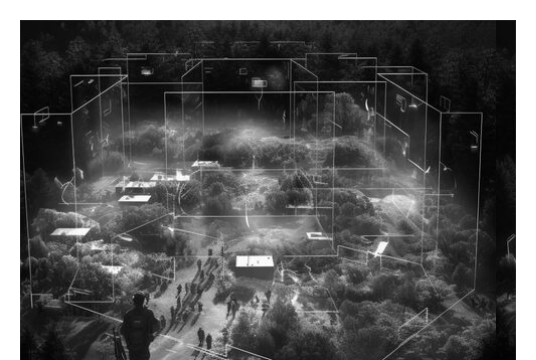
Virtual land can form an important part of a metaverse gaming ecosystem.
We can develop:
Virtual Land ParcelsLand Ownership RecordsProperty CustomizationLand SalesLand RentalsBuilding SystemsResource GenerationAccess PermissionsLand AuctionsCommercial SpacesEvent VenuesAdvertising SpacesPublic and Private ZonesMap NavigationProperty AnalyticsNot every game asset needs to be represented as an NFT. We help determine where blockchain ownership provides meaningful value.
/// Avatar System
Avatar and Digital Identity Development
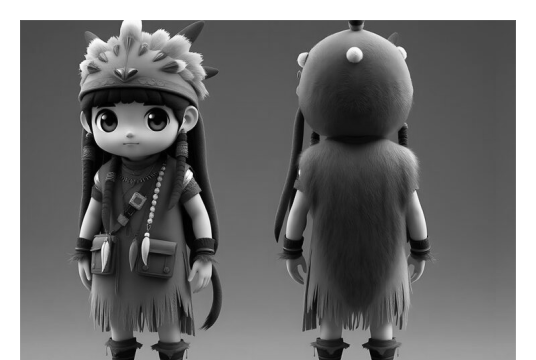
Avatars allow players to establish recognizable identities within the metaverse.
We develop avatar systems with:
Body and Face CustomizationHairstyles and ColorsClothing and AccessoriesNFT WearablesWeapons and EquipmentFacial ExpressionsEmotesMovement AnimationsCombat AnimationsPlayer ProfilesAchievement BadgesReputation IndicatorsMulti-Avatar AccountsDynamic Appearance ChangesFor example, a digital shoe may gain a new visual appearance after the user completes a distance milestone, or a badge may upgrade after a series of verified challenges. Dynamic updates can be managed through authorized platform services, smart contract rules, metadata APIs, or a hybrid architecture.
/// Marketplace
In-Game NFT Marketplace Development
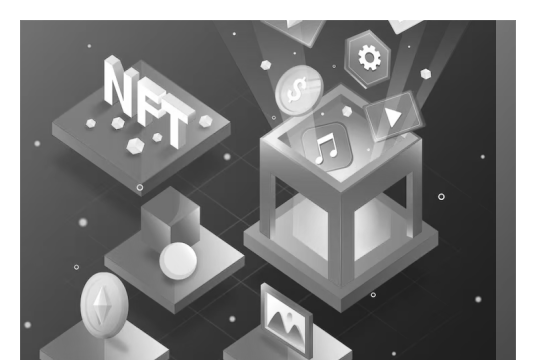
A GameFi marketplace enables players and creators to exchange supported digital assets.
We can develop:
Fixed-Price ListingsAuctionsOffers and CounteroffersNFT RentalsAsset BundlesVirtual Land SalesWearable TradingCollection FiltersRarity FiltersPrice HistoryMarketplace FeesCreator RoyaltiesEscrow SettlementWallet PaymentsFiat Payment IntegrationTransaction HistoryAsset VerificationFraud MonitoringNot every game asset needs to be represented as an NFT. We help determine where blockchain ownership provides meaningful value.
///SMART CONTRACTS
Smart Contracts We Develop

NFT Minting Contracts
Create characters, equipment, virtual land, wearables, collectibles, achievements, and other supported game assets.
Marketplace Contracts
Manage listings, purchases, offers, auctions, fees, rentals, and NFT transfers.
Crafting Contracts
Allow players to combine, consume, or burn eligible assets to produce new game items.
Upgrade Contracts
Control asset evolution, attribute improvements, visual changes, and gameplay-related enhancements.

Reward Contracts
Distribute supported tokens, NFTs, access rights, or other benefits based on verified platform activity.

Staking Contracts
Enable users to stake selected assets according to predefined reward and participation rules.
Rental Contracts
Provide temporary usage rights for game assets while maintaining the original ownership record.
Tournament Contracts
Manage tournament entry, prize pools, result settlement, and reward distribution.

Governance Contracts
Allow eligible stakeholders to create proposals, vote, delegate participation, and manage selected ecosystem decisions.
Treasury Contracts
Manage community, ecosystem, development, or reward funds according to defined permissions and governance processes.
Create characters, equipment, virtual land, wearables, collectibles, achievements, and other supported game assets.
Manage listings, purchases, offers, auctions, fees, rentals, and NFT transfers.
Allow players to combine, consume, or burn eligible assets to produce new game items.
Control asset evolution, attribute improvements, visual changes, and gameplay-related enhancements.
Distribute supported tokens, NFTs, access rights, or other benefits based on verified platform activity.
Enable users to stake selected assets according to predefined reward and participation rules.
Provide temporary usage rights for game assets while maintaining the original ownership record.
Manage tournament entry, prize pools, result settlement, and reward distribution.
Allow eligible stakeholders to create proposals, vote, delegate participation, and manage selected ecosystem decisions.
Manage community, ecosystem, development, or reward funds according to defined permissions and governance processes.
/// Tokenomics
GameFi Tokenomics and Economy Design
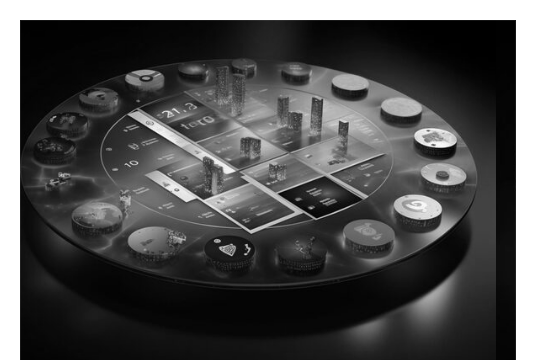
A sustainable GameFi economy requires careful control over asset supply, rewards, utility, and player progression.
We help design:
Game Currency UtilityToken SupplyNFT SupplyAsset RarityReward DistributionMarketplace FeesToken SinksCrafting CostsUpgrade CostsAsset DurabilitySeasonal RewardsTournament PrizesStaking IncentivesTreasury AllocationGovernance UtilityCreator RevenueGuild RewardsInflation ControlsFor example, a digital shoe may gain a new visual appearance after the user completes a distance milestone, or a badge may upgrade after a series of verified challenges. Dynamic updates can be managed through authorized platform services, smart contract rules, metadata APIs, or a hybrid architecture.
/// TOKEN ECONOMY
Single-Token and Dual-Token Game Economies
Single-Token Economy
A single asset may be used for gameplay, rewards, marketplace payments, staking, and governance.
This can simplify the ecosystem but requires careful management to prevent reward inflation and conflicting utility.
Dual-Token Economy
A platform may separate the primary ecosystem or governance token from a more frequently used in-game currency.
A platform may separate the primary ecosystem or governance token from a more frequently used in-game currency.
/// BUSINESS MODELS
GameFi Business Models
NFT and Game Asset Sales
Generate revenue through characters, land, wearables, equipment, collectibles, access passes, and premium assets.
Marketplace Transaction Fees
Charge a fixed or percentage-based fee on eligible marketplace transactions.
Subscription Plans
Offer premium access, enhanced features, exclusive content, expanded inventory, or community benefits.
Battle Passes
Sell seasonal access to missions, rewards, cosmetics, competitions, and progression systems.
Tournament Entry
Generate revenue through competitive events, premium competitions, sponsorships, or participation fees.
Virtual Land Monetization
Sell, rent, or license selected virtual spaces to players, creators, communities, and brands.
Crafting and Upgrade Fees
Use supported in-game currencies or assets for creating, combining, repairing, or improving game items.
Creator Marketplace Fees
Earn revenue when approved creators sell wearables, environments, game items, or interactive experiences.
Branded Experiences
Develop sponsored virtual spaces, assets, events, quests, tournaments, and promotional campaigns.
Enterprise Licensing
Provide customized GameFi or metaverse technology to brands, publishers, communities, and institutions.
/// ARCHITECTURE
Blockchain Architecture

Activities That May Be Suitable On-Chain
NFT OwnershipAsset MintingMarketplace SettlementHigh-Value Asset TransfersCrafting and UpgradesStakingGovernanceVerifiable RewardsVirtual Land Transactions
Activities Usually Better Off-Chain
Character MovementReal-Time CombatMatchmakingTemporary Game StatesFrequent Resource UpdatesAnimationVisual EffectsMultiplayer SynchronizationRoutine Player InteractionsWe design hybrid architectures that combine blockchain-based ownership with high-performance off-chain gameplay.

/// Wallet
GameFi Wallet Development and Integration
Wallets allow users to manage game assets, tokens, rewards, and marketplace activity.
We can develop or integrate:
Embedded Gaming WalletsCustodial WalletsNon-Custodial WalletsAccount Abstraction WalletsMPC WalletsSocial Login WalletsMulti-Chain WalletsMobile Gaming WalletsWeb WalletsWalletConnectMetaMaskCoinbase WalletTrust WalletPhantomThe wallet model is selected according to the target audience, custody requirements, recovery needs, blockchain networks, and regulatory considerations.
/// Governance
DAO and Community Governance
GameFi platforms can allow selected users to participate in ecosystem decisions.
Governance may cover:
Community ProposalsNew Game FeaturesTreasury AllocationTournament RulesGuild PoliciesEcosystem GrantsMarketplace ParametersVirtual Land PoliciesCreator ProgramsCommunity EventsAsset StandardsProtocol UpgradesGovernance should not automatically control every aspect of the game. Core gameplay, security, moderation, intellectual property, and regulatory decisions may remain under structured administrative control.

/// Creator Economy
Creator Economy Development
A creator economy allows approved users to build and monetize content within the platform.
Creator tools may include:
Avatar Wearable CreationVirtual Building ToolsLand CustomizationNFT Collection CreationMini-Game DevelopmentEvent HostingDigital StorefrontsAsset PublishingPricing ControlsRevenue TrackingCreator RoyaltiesContent ModerationAsset ApprovalAnalyticsUser-generated content requires clear intellectual property policies, moderation systems, asset validation, and platform rules.
/// Cross-Chain
Cross-Chain and Multi-Chain GameFi Development
A GameFi platform may support multiple blockchain networks for assets, payments, or ecosystem expansion.
We can develop:
Multi-Chain Wallet ConnectivityCross-Chain Asset RecognitionToken BridgesNFT BridgesUnified Asset DashboardsNetwork-Specific MarketplacesCross-Chain MessagingShared Player ProfilesMulti-Chain Transaction HistoryCross-chain functionality introduces additional smart contract, bridge, liquidity, and security risks. It should be implemented only when it provides clear product value.

/// Web3 UX
Gasless and User-Friendly Web3 Experiences
Players should be able to enjoy the game without managing complex blockchain operations. We can simplify onboarding through:
Embedded WalletsSocial LoginEmail-Based RegistrationAccount AbstractionSponsored TransactionsMeta-TransactionsSession KeysBatched TransactionsAutomatic Network SwitchingLayer 2 NetworksApplication-Specific ChainsFiat Payment IntegrationManaged Gas FeesThese approaches can reduce wallet prompts, gas-payment friction, seed-phrase complexity, and manual transaction steps.

///CHALLENGES
Common Business Challenges
We Help Solve
We help founders, game studios, communities, and enterprises answer questions such as:
We help answer questions such as:
Our gaming and blockchain specialists turn these requirements into a practical product, technical, and economic roadmap.
///BENEFITS
Benefits of Web3 Metaverse GameFi Development
Meaningful Digital Ownership
Allow users to verify ownership and transaction history for selected blockchain-based game assets.
Immersive Player Engagement
Combine gameplay, exploration, social activity, events, customization, progression, and community participation.
Multiple Revenue Opportunities
Generate revenue through assets, subscriptions, marketplaces, events, virtual land, creator tools, and branded experiences.
Community-Led Growth
Use guilds, creators, tournaments, governance, social experiences, and digital ownership to strengthen participation.
Transparent Asset Scarcity
Use smart contracts to define and enforce supported asset supplies and minting conditions.
Expandable Virtual Economy
Add new game assets, worlds, events, communities, creators, and monetization models over time.
Global Accessibility
Allow users from different regions to participate in compatible virtual experiences and digital marketplaces.
Complete Product Control
Own and manage the platform, gameplay, smart contracts, virtual economy, assets, user experience, and product roadmap according to the development agreement.
Allow users to verify ownership and transaction history for selected blockchain-based game assets.
Combine gameplay, exploration, social activity, events, customization, progression, and community participation.
Generate revenue through assets, subscriptions, marketplaces, events, virtual land, creator tools, and branded experiences.
Use guilds, creators, tournaments, governance, social experiences, and digital ownership to strengthen participation.
Use smart contracts to define and enforce supported asset supplies and minting conditions.
Add new game assets, worlds, events, communities, creators, and monetization models over time.
Allow users from different regions to participate in compatible virtual experiences and digital marketplaces.
Own and manage the platform, gameplay, smart contracts, virtual economy, assets, user experience, and product roadmap according to the development agreement.
/// SECURITY
Web3 Metaverse GameFi Security
GameFi platforms may handle player accounts, wallets, NFTs, tokens, marketplaces, smart contracts, multiplayer systems, and digital economies.
No GameFi or metaverse platform can be guaranteed to be completely free of security risks. Continuous monitoring, testing, moderation, economic analysis, and maintenance remain essential.
Our Web3 Metaverse GameFi Development Process
Discovery and Feasibility Assessment
Understand your game concept, audience, gameplay loop, virtual world, business model, blockchain objectives, and platform requirements.
Game and Metaverse Strategy
Define the game genre, environments, player activities, avatars, social systems, asset ownership, and ecosystem roadmap.
Game Economy and Tokenomics
Design currencies, NFT supply, asset rarity, rewards, sinks, fees, progression, creator revenue, and economic controls.
Technical and Blockchain Architecture
Select the game engine, blockchain network, token standards, wallet model, backend infrastructure, multiplayer architecture, smart contracts, and storage system.
Game Design and Product Documentation
Prepare the Game Design Document, feature requirements, user flows, asset logic, economy rules, and development scope.
UI/UX and Virtual World Design
Create interfaces, player journeys, avatar experiences, environments, maps, marketplace flows, and administrative systems.
Game and Metaverse Development
Build gameplay, environments, characters, levels, multiplayer systems, missions, inventories, progression, and social features.
Smart Contract Development
Develop NFT, marketplace, reward, crafting, staking, rental, land, tournament, governance, or treasury contracts.
Wallet and Blockchain Integration
Connect embedded wallets, smart contracts, asset storage, indexers, marketplaces, payments, and blockchain networks.
Backend and Admin Development
Build player management, game configuration, moderation, economy controls, analytics, content management, and transaction monitoring.
Testing and Security Review
Test gameplay, multiplayer performance, contracts, wallets, marketplace workflows, rewards, economics, APIs, and user security.
Testnet and Closed Beta
Deploy blockchain components to a test network and release the platform to selected users for validation and feedback.
Mainnet and Production Launch
Deploy the approved game, smart contracts, wallets, marketplace, virtual world, and production infrastructure.
Post-Launch Development
Provide new content, seasonal events, economic balancing, smart contract upgrades, performance improvements, security updates, and ecosystem expansion.
Understand your game concept, audience, gameplay loop, virtual world, business model, blockchain objectives, and platform requirements.
Define the game genre, environments, player activities, avatars, social systems, asset ownership, and ecosystem roadmap.
Design currencies, NFT supply, asset rarity, rewards, sinks, fees, progression, creator revenue, and economic controls.
Select the game engine, blockchain network, token standards, wallet model, backend infrastructure, multiplayer architecture, smart contracts, and storage system.
Prepare the Game Design Document, feature requirements, user flows, asset logic, economy rules, and development scope.
Create interfaces, player journeys, avatar experiences, environments, maps, marketplace flows, and administrative systems.
Build gameplay, environments, characters, levels, multiplayer systems, missions, inventories, progression, and social features.
Develop NFT, marketplace, reward, crafting, staking, rental, land, tournament, governance, or treasury contracts.
Connect embedded wallets, smart contracts, asset storage, indexers, marketplaces, payments, and blockchain networks.
Build player management, game configuration, moderation, economy controls, analytics, content management, and transaction monitoring.
Test gameplay, multiplayer performance, contracts, wallets, marketplace workflows, rewards, economics, APIs, and user security.
Deploy blockchain components to a test network and release the platform to selected users for validation and feedback.
Deploy the approved game, smart contracts, wallets, marketplace, virtual world, and production infrastructure.
Provide new content, seasonal events, economic balancing, smart contract upgrades, performance improvements, security updates, and ecosystem expansion.
/// CORE FEATURES
Web3 Metaverse GameFi Development Deliverables
Depending on the project scope, deliverables may include:

/// /// BLOCKCHAIN
Blockchain Networks We Work With
We build on the most relevant chains for gaming, combining performance, low fees, and robust NFT ecosystems to deliver the best player experience.
EthereumPolygonBaseArbitrumOptimismBNB Smart ChainAvalancheSolanaImmutableRoninAptosSuiCustom EVM NetworksLayer 2 NetworksApplication-Specific ChainsOur multi-chain approach ensures your game reaches the widest audience while leveraging each network's unique strengths for gaming.
///TECHNOLOGY
We Work With


////// WHY CHOOSE US
Why Choose Sodio?

Custom GameFi Development
We build every platform around your gameplay, virtual world, audience, and business model rather than reselling generic or white-label software.

Gameplay-First Approach
We prioritize player engagement and use blockchain only where it provides meaningful ownership, utility, transparency, or community value.

Gaming and Blockchain Expertise
Our team understands game engines, multiplayer systems, NFTs, wallets, smart contracts, marketplaces, tokenomics, and distributed infrastructure.

End-to-End Product Development
We manage product strategy, game design, virtual environments, UI/UX, game development, blockchain integration, testing, deployment, and maintenance.

Simplified Web3 Onboarding
We use embedded wallets, social login, sponsored transactions, and account abstraction to create more accessible player experiences.

Security-Focused Engineering
Security considerations are incorporated across smart contracts, wallets, player accounts, game servers, marketplaces, and administrative systems.

Scalable Architecture
We design platforms for growing players, assets, transactions, multiplayer sessions, virtual worlds, and seasonal content.

Source Code Ownership
The agreed game code, smart contracts, platform assets, documentation, and deployment resources can be delivered according to the development agreement.

Long-Term Technology Partnership
We support live operations, new game content, seasonal updates, blockchain upgrades, economic balancing, virtual world expansion, and performance optimization.
We build every platform around your gameplay, virtual world, audience, and business model rather than reselling generic or white-label software.
We prioritize player engagement and use blockchain only where it provides meaningful ownership, utility, transparency, or community value.
Our team understands game engines, multiplayer systems, NFTs, wallets, smart contracts, marketplaces, tokenomics, and distributed infrastructure.
We manage product strategy, game design, virtual environments, UI/UX, game development, blockchain integration, testing, deployment, and maintenance.
We use embedded wallets, social login, sponsored transactions, and account abstraction to create more accessible player experiences.
Security considerations are incorporated across smart contracts, wallets, player accounts, game servers, marketplaces, and administrative systems.
We design platforms for growing players, assets, transactions, multiplayer sessions, virtual worlds, and seasonal content.
The agreed game code, smart contracts, platform assets, documentation, and deployment resources can be delivered according to the development agreement.
We support live operations, new game content, seasonal updates, blockchain upgrades, economic balancing, virtual world expansion, and performance optimization.
/// FAQ
Frequently Asked Questions
It involves creating an interactive virtual gaming ecosystem that combines gameplay, social experiences, blockchain ownership, NFTs, wallets, digital marketplaces, and game-economy mechanics.
GameFi refers to gaming applications that integrate blockchain-based assets, digital economies, ownership, rewards, marketplaces, or decentralized financial mechanics.
Not necessarily. GameFi can include ownership, trading, crafting, staking, rewards, governance, or creator economies. A platform does not need to promise financial earning to qualify as GameFi.
Yes. We can help refine the concept, create the Game Design Document, define the economy, design the technical architecture, and develop the complete platform.
No. Blockchain should be used only when verifiable ownership, asset transfers, transparent scarcity, governance, or digital economies add meaningful value.
Characters, avatars, skins, equipment, vehicles, land, collectibles, tickets, memberships, achievements, and other selected assets can be represented as NFTs.
Yes. Embedded wallets, email registration, social login, and account abstraction can provide familiar onboarding for non-technical players.
Yes. Sponsored transactions, meta-transactions, session keys, batching, and Layer 2 infrastructure can reduce player-facing gas friction.
Yes. We develop land parcels, ownership, customization, rentals, sales, auctions, buildings, permissions, monetization, and map systems.
Yes. We can build creator tools, approval workflows, asset publishing, marketplaces, royalties, content moderation, and revenue tracking.
Yes. We build marketplaces with listings, purchases, auctions, offers, rentals, fees, royalties, filters, wallet payments, and transaction tracking.
Yes. We help design game currencies, NFT supplies, rewards, sinks, marketplace fees, staking utility, treasury allocation, and inflation controls.
No. A game may use blockchain assets without launching a separate token. We assess whether a token adds genuine product utility before recommending one.
They can be recognized by multiple games when those games intentionally support compatible models, metadata, functionality, and ownership standards. NFT ownership alone does not guarantee interoperability.
Yes. We can integrate wallets, NFTs, tokens, smart contracts, marketplaces, rewards, and asset ownership into compatible existing games.
The cost depends on the game genre, virtual-world complexity, platforms, artwork, multiplayer requirements, smart contracts, marketplace features, and blockchain infrastructure.
A focused MVP may require several months. A complex multiplayer metaverse with custom 3D environments, marketplaces, wallets, and GameFi mechanics typically requires a longer phased roadmap.
No. We do not guarantee token prices, NFT values, marketplace liquidity, player profitability, adoption, or financial returns.
We perform internal testing and security reviews. Independent third-party audits may also be recommended for production smart contracts managing valuable assets.
Source code ownership and licensing are defined in the development agreement. Sodio can deliver the agreed game code, smart contracts, documentation, and deployment assets.
Yes. We provide game updates, new content, monitoring, blockchain upgrades, security improvements, economic balancing, performance optimization, and long-term technical support.
READY TO BUILD YOUR GAMEFI ECOSYSTEM?
Build a Web3 Metaverse GameFi Ecosystem Designed for Long-Term Engagement
Whether you are creating an open-world metaverse, multiplayer RPG, virtual land ecosystem, social gaming world, or creator-led GameFi platform, Sodio can help you build it from the ground up. Launch an immersive gaming experience with meaningful digital ownership, intuitive player onboarding, secure blockchain infrastructure, and a virtual economy designed around real gameplay utility.