

How to Make an App Like Boxed
How to Make an App Like Boxed
Bulk shopping used to mean a membership card, a long drive, and a cart the size of a small car. Boxed changed that by moving the warehouse club experience onto the phone — no membership fee, bulk-sized pricing, and doorstep delivery. The model resonated so strongly that Boxed became one of the more talked-about e-commerce plays of the last decade.
If you're planning to build something similar — whether for a regional market, a specific vertical like office supplies or restaurant provisions, or a general bulk-grocery play — this guide walks through what actually goes into building an app like Boxed: the features, the architecture, the team, the costs, and the pitfalls.
If this is relevant to your project, check out How to Make an App Like Thrive Market.
What Makes Boxed Different From a Regular Grocery App
Before writing a line of code, it's worth being precise about the model, because it drives nearly every technical decision downstream.
For a closer look at a related topic, read our guide on How to Make an App Like Safeway.
Bulk-first catalog. Products are sold in cases, multipacks, and large formats rather than single units. This changes how you model SKUs, pricing, and shipping weight.
No membership required. Boxed removed the paywall that Costco and Sam's Club rely on, while offering an optional premium tier for perks like free shipping and cashback.
Ship-from-warehouse, not store-picking. Unlike instant-delivery grocery apps that dispatch shoppers to nearby stores, Boxed fulfills from its own distribution centers. That means fewer real-time constraints but heavier logistics and inventory logic.
Smart bulk savings. Features like "Boxed Up" bundles and volume discounts nudge larger basket sizes, which is essential when your margins depend on shipping economics.
Your app doesn't have to copy all four. But whichever you drop, you need a plan for the gap it leaves.
Core Feature Set
Customer-Facing Features
Onboarding and accounts
- Social, email, and phone-based signup
- Guest checkout to reduce first-purchase friction
- ZIP code capture early, so you can show accurate availability and delivery windows
Product discovery
- Category browsing built for bulk (by pantry, household, office, baby, etc.)
- Search with typo tolerance, synonyms, and unit-aware queries ("24 pack paper towels")
- Filters for price-per-unit, brand, dietary tags, and pack size
- Personalized recommendations based on purchase history and replenishment cycles
Price-per-unit transparency This is non-negotiable for a bulk app. Shoppers buy in volume to save, so every listing should show both the total price and the normalized unit price (per roll, per ounce, per count). It's a small UI detail that directly drives conversion.
Cart and bundles
- Persistent cart synced across devices
- Bundle builders that let users assemble their own multi-item packs at a discount
- Threshold prompts ("Add $12 more for free shipping")
Subscriptions and auto-replenishment Bulk consumption is predictable. Let users set recurring deliveries at custom intervals, with easy skip, pause, and swap. Subscription revenue is the single biggest lever for lifetime value in this category.
Checkout and payments
- Card, digital wallets (Apple Pay, Google Pay), and BNPL options
- Saved payment methods with tokenization
- Promo codes, gift cards, store credit, and loyalty point redemption
- Support for EBT/SNAP if you're targeting grocery in the US — a meaningful differentiator
Order tracking
- Real-time status from packing to carrier handoff to delivery
- Push notifications at each milestone
- Clear substitution and out-of-stock handling with customer approval flows
Post-purchase
- Easy reordering from past orders
- Returns and refunds workflow
- Ratings, reviews, and photo uploads
- In-app support with chat and ticket history
Loyalty and referrals Cashback wallets, tiered membership perks, and referral credits. Bulk buyers are high-intent and repeat-heavy — reward that behavior explicitly.
Admin and Operations Features
This is where most bulk-commerce apps live or die, and where founders consistently underestimate scope.
Catalog management — bulk SKU imports, variant and pack-size handling, dimensional weight, pricing rules, and regional availability.
Inventory across warehouses — real-time stock levels per distribution center, safety stock thresholds, reorder alerts, and allocation logic that picks the cheapest fulfilling warehouse for each order.
Order management system (OMS) — order routing, splitting shipments, exception handling, cancellations, and partial refunds.
Warehouse management integration — pick lists, batch picking, packing optimization, and label generation. Either build light WMS features or integrate with an existing system.
Shipping and carrier logic — rate shopping across carriers, dimensional weight calculation, zone-based pricing, and free-shipping threshold math. Bulk items are heavy; a naive shipping calculator will quietly destroy your margins.
Promotions engine — volume discounts, BOGO, category-wide sales, first-order coupons, and stacking rules.
Analytics dashboards — basket size, margin per order, cost-to-serve by zone, repeat rate, subscription churn, and inventory turnover.
Technology Stack
There's no single correct stack, but here's a proven, pragmatic configuration.
Mobile apps
- React Native or Flutter for a single codebase across iOS and Android — the right call for most commerce apps, where the UI is largely standard and speed-to-market matters
- Swift and Kotlin native if you need deep platform integrations or have very high performance requirements
Frontend web
- Next.js or Nuxt for a server-rendered storefront — critical for SEO, since organic product-page traffic is a major acquisition channel
Backend
- Node.js (NestJS), Python (Django/FastAPI), or Go for core services
- Microservices or a modular monolith split along domain lines: catalog, cart, orders, inventory, payments, fulfillment, promotions, notifications
Data layer
- PostgreSQL as the transactional source of truth
- Redis for carts, sessions, and caching
- Elasticsearch or Algolia / Typesense for search and faceted filtering
- Kafka or RabbitMQ for event-driven flows like order-placed, inventory-updated, shipment-created
Infrastructure
- AWS, GCP, or Azure with containerized services on Kubernetes or ECS
- CDN (CloudFront, Cloudflare) for images and static assets
- CI/CD via GitHub Actions or GitLab, with staging environments that mirror production
Third-party integrations
- Payments: Stripe, Braintree, Adyen
- Tax: Avalara or TaxJar (bulk grocery has messy, category-specific tax rules)
- Shipping: EasyPost, Shippo, or direct carrier APIs
- Notifications: Firebase Cloud Messaging, Twilio, SendGrid
- Analytics: Mixpanel or Amplitude plus a warehouse like BigQuery or Snowflake
Architecture Considerations Specific to Bulk Commerce
Dimensional weight is a first-class concept. Every SKU needs accurate dimensions and weight, and your cart must compute shipping in real time as items are added. Get this wrong and you'll either overcharge customers or eat the difference.
Inventory reservations. When a user adds a case of paper towels to their cart, do you reserve it? Soft reservations with TTL expiry prevent overselling without locking stock indefinitely. Decide your policy early; retrofitting it is painful.
Multi-warehouse allocation. An order with five items might be fulfillable from one warehouse or require a split. Splitting costs more but may be faster. Build an allocation engine with configurable rules rather than hardcoding the logic.
Price-per-unit normalization. You need a canonical unit for every product category so comparisons are honest and sortable. This requires disciplined data entry and validation at catalog ingest.
Substitution logic. Out-of-stocks are inevitable. Offer pre-approved substitutions, let customers set preferences, and never silently swap items.
Design and UX Priorities
Bulk shopping has a distinct psychology: shoppers are planners, not impulse buyers. Design accordingly.
- Lead with savings math. Show "$0.42 per roll" next to "$18.99 for 45 rolls." Make the value legible at a glance.
- Optimize for large baskets. Carts with 20+ items need collapsible grouping, quick quantity steppers, and a sticky summary bar.
- Make reordering one tap. Your best customer is buying the same twelve things every six weeks. Surface that list on the home screen.
- Respect the delivery window. Show realistic dates before checkout, not after. Nothing kills trust faster than a surprise two-week ETA.
- Design for thumbs and for scale. Dense product grids, fast image loading, and generous tap targets. Test on mid-range Android devices, not just flagship iPhones.
Development Roadmap
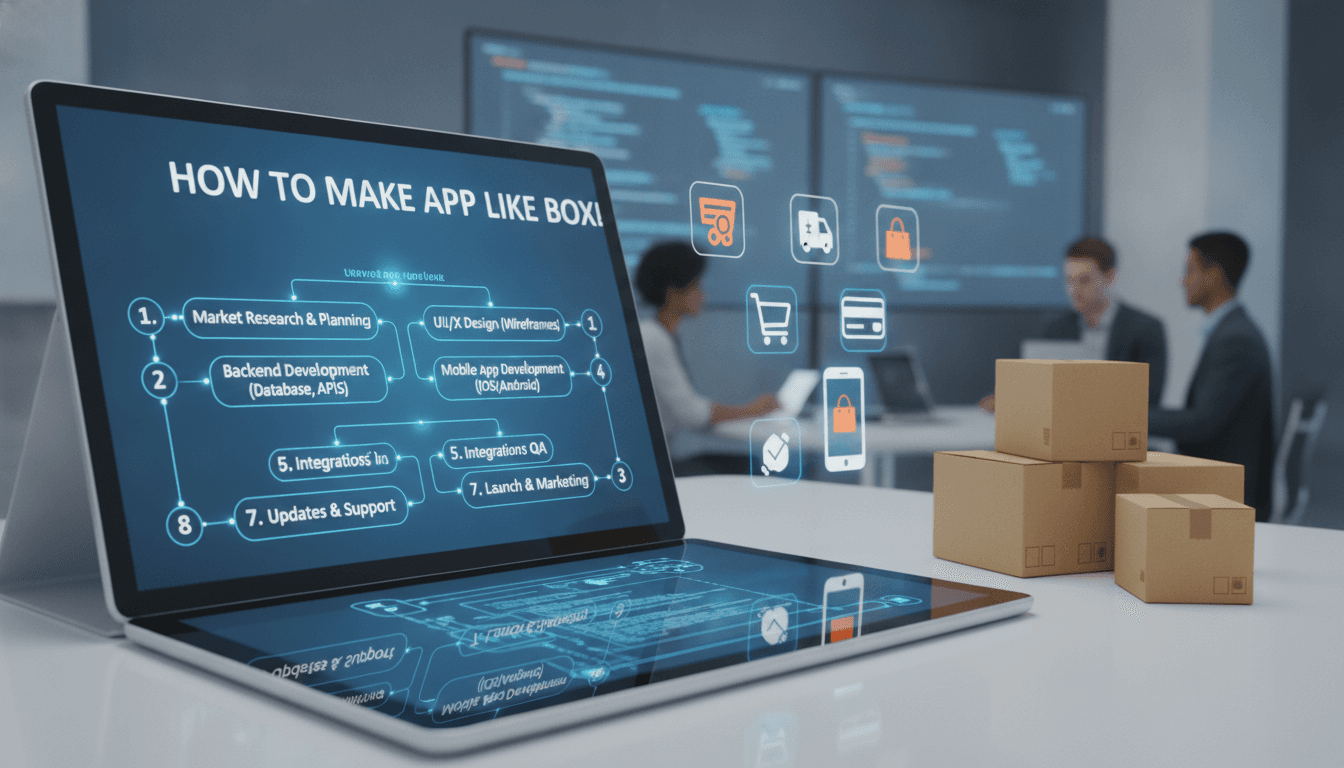
Phase 1 — Discovery and definition (2–4 weeks) Market research, competitor teardown, unit-economics modeling, feature prioritization, technical architecture, and wireframes.
Phase 2 — Design (3–5 weeks) Design system, high-fidelity screens for core flows, prototype, and usability testing with target buyers.
Phase 3 — MVP build (12–20 weeks) Catalog, search, cart, checkout, order tracking, admin panel, and one warehouse integration. Resist the urge to ship subscriptions, loyalty, and multi-warehouse in v1.
Phase 4 — QA and pilot (3–5 weeks) Functional, performance, payment, and security testing. Launch in a single metro or ZIP cluster to stress-test fulfillment before scaling.
Phase 5 — Launch and iterate Public release, then layered rollout of subscriptions, personalization, loyalty, and additional fulfillment centers driven by real usage data.
Team Composition
A realistic team for a serious build:
- 1 product manager
- 1 UI/UX designer
- 2–3 backend engineers
- 2 mobile engineers (or 2 cross-platform engineers)
- 1 frontend/web engineer
- 1 DevOps engineer (part-time is often sufficient early)
- 1–2 QA engineers
- 1 business analyst for catalog and logistics modeling
Smaller teams can ship an MVP, but bulk commerce touches so many operational systems that under-resourcing the backend and data work is the most common failure mode.
Related reading: How to Make an App Like FreshDirect.
Cost Estimate
Costs vary widely by region and scope, but as a planning range:
| Scope | Typical Range |
|---|---|
| Lean MVP (single platform, one warehouse, core commerce) | $60,000 – $110,000 |
| Full MVP (iOS + Android + web, admin panel, subscriptions) | $120,000 – $220,000 |
| Scaled platform (multi-warehouse, OMS/WMS, personalization, loyalty) | $250,000+ |
Budget an additional 15–25% of build cost annually for maintenance, infrastructure, and third-party service fees. And remember that software is often the cheaper half of this business — warehousing, inventory, and last-mile costs dominate the P&L.
How These Apps Make Money
- Product margin on bulk goods, thinner per unit but larger per order
- Premium membership tiers for free shipping, cashback, and early access
- Subscription revenue from auto-replenishment, which also stabilizes demand forecasting
- Vendor-funded promotions — brands pay for featured placement and sampling
- Retail media — sponsored search results and category takeovers, increasingly the highest-margin line item in e-commerce
- B2B accounts — offices, cafés, and small businesses buying in volume with invoicing and net terms
Common Pitfalls
Ignoring shipping economics until launch. Heavy, low-margin goods plus free shipping thresholds is a math problem, not a marketing one. Model it before you build.
Launching too wide. Every new fulfillment zone multiplies inventory, carrier, and support complexity. Prove the model in one region first.
Treating inventory as an afterthought. Overselling a case of diapers costs you a customer permanently. Real-time, accurate stock is table stakes.
Copying features instead of the model. Boxed's "no membership" choice was strategic, not cosmetic. Understand why each feature exists before replicating it.
Underinvesting in the admin panel. Your operations team will spend more hours in the back office than customers spend in the app. Build it properly.
Final Thoughts
An app like Boxed is really three products in one: a consumer shopping experience, a logistics platform, and a merchandising engine. The mobile app is the visible tip; the inventory, allocation, and shipping logic underneath is where the durable advantage lives.
Start narrow — one category, one region, one fulfillment center — and get the unit economics working before you scale the technology. Build the catalog and inventory foundations properly from day one, because those are the hardest things to retrofit. And keep price-per-unit transparency front and center, because that's the entire reason your customers chose bulk in the first place.
If you're evaluating a build like this, the most valuable first step isn't a feature list — it's a spreadsheet that proves an average order can be delivered profitably. Get that right, and the app becomes a straightforward engineering problem.
Have a project in mind? Contact Sodio Technologies to discuss your requirements and explore the right technology solution for your business.
/// Work with us
Talk to the engineers who'd build it
You'll get a technical scope, timeline and cost estimate from the people doing the work, not an account manager. In-house team, no subcontracting, since 2016.