

How to Make an App Like Breethe
How to Make an App Like Breethe
Meditation and mindfulness apps have moved from niche wellness tools to mainstream daily habits. Breethe, with its guided meditations, sleep stories, calming music, and coaching-style content, is one of the standout names in this space alongside Calm and Headspace.
If you're planning to build something similar, this guide walks through what Breethe actually does, what it takes to replicate (and improve on) that experience, and how much time and budget you should realistically set aside.
For a closer look at a related topic, read our guide on How to Make an App Like Smiling Mind.
What Makes Breethe Work
Before writing a line of code, it helps to understand why Breethe resonates with users.
- Content depth over feature bloat. The app leans on a large, well-produced library rather than gimmicks.
- Personalisation from day one. Onboarding asks about stress levels, sleep quality, and goals, then serves a tailored plan.
- Low-friction sessions. Users can start a 3-minute session without hunting through menus.
- Habit mechanics. Streaks, reminders, and progress tracking keep people coming back.
- Offline access. Downloadable audio means meditation works on a plane or in a basement gym.
Any app in this category lives or dies on content quality and how quickly a user finds the right session for how they feel right now.
If this is relevant to your project, check out How to Make an App Like Simple Habit.
Core Feature Set
Must-Have Features (MVP)
User onboarding and profiling A short questionnaire covering goals (sleep, anxiety, focus, stress), experience level, and preferred session length. This data drives your recommendation engine.
Authentication and profiles Email, Apple Sign-In, Google Sign-In. Apple Sign-In is mandatory if you offer other social logins on iOS.
Content library Guided meditations, sleep stories, breathing exercises, ambient soundscapes, and masterclasses. Organise by category, duration, instructor, and mood.
Audio player This is the heart of the app. It needs background playback, lock-screen controls, CarPlay/Android Auto support, sleep timers, and seamless handling of interruptions like phone calls.
Offline downloads Encrypted local storage of purchased or subscribed content, with expiry logic tied to subscription status.
Progress tracking Minutes meditated, current streak, sessions completed, and mood check-ins before and after sessions.
Reminders and notifications Smart, time-of-day-aware nudges. Get this wrong and users uninstall; get it right and retention doubles.
Subscription and payments Freemium model with a paywall. In-app purchases via StoreKit and Google Play Billing, plus a server-side receipt validation layer.
Features That Differentiate
- Mood-based recommendations using a simple ML model that learns from listening history and post-session feedback.
- Wearable integration with Apple Health, Google Fit, Fitbit, or Oura for heart-rate and sleep data.
- Live sessions with instructors, streamed to subscribers.
- Breathing visualiser with haptic feedback synchronised to inhale/exhale cycles.
- Family or team plans for households and corporate wellness clients.
- Widgets and watch apps so a session is one tap away.
Tech Stack Recommendations
Frontend
Cross-platform: Flutter or React Native will cover iOS and Android from one codebase and cut costs by roughly 30–40%. Flutter handles custom animations (breathing circles, waveforms) particularly well.
Native: Swift and Kotlin are worth the extra spend if you want deep audio control, best-in-class background playback, tight watchOS integration, and advanced haptics.
For a meditation app, cross-platform is usually sufficient — but audio edge cases on Android fragmentation will eat more QA time than you expect.
If this is relevant to your project, check out How to Make an App Like Insight Timer.
Backend
- Runtime: Node.js with NestJS, or Python with Django/FastAPI
- Database: PostgreSQL for relational data, Redis for sessions and caching
- Content delivery: AWS S3 plus CloudFront, or Cloudflare R2 for cheaper egress
- Streaming: HLS with adaptive bitrate so audio starts instantly on poor connections
- Search: Elasticsearch or Algolia for content discovery
- Analytics: Mixpanel or Amplitude for funnels, plus Firebase for crash reporting
Infrastructure
Containerise with Docker, orchestrate with ECS or Kubernetes, and run CI/CD through GitHub Actions. Use a CMS (Strapi, Contentful, or a custom admin panel) so your content team can publish without engineering involvement — this is non-negotiable at scale.
The Content Problem
Here's the part most founders underestimate: the app is the easy bit.
Breethe's value is hundreds of hours of professionally produced audio. You'll need to:
- Hire instructors and voice talent. Expect £200–£800 per finished session depending on the name attached.
- Produce and master audio. Studio time, editing, background music licensing.
- License music. Royalty-free libraries are cheap; original composition is better but costlier.
- Script and review. Mindfulness content needs editorial oversight — poorly written scripts feel jarring.
- Localise. Multi-language support means re-recording, not just translating strings.
Budget for at least 60–100 sessions at launch. Fewer than that and users churn within two weeks.
Monetisation Models
| Model | How It Works | Best For |
|---|---|---|
| Freemium subscription | Free tier with limited content; monthly/annual premium | Consumer apps at scale |
| Lifetime purchase | One-time fee for permanent access | Boosting early cash flow |
| B2B wellness | Per-seat licensing to employers | Higher ACV, lower churn |
| In-app purchases | Individual courses or bundles | Supplementing subscriptions |
| Sponsorship | Branded content and partnerships | Established user bases |
Most successful apps in this space run freemium with a 7-day trial and a 40–50% annual discount. Annual plans dramatically improve LTV and reduce churn.
Development Process
Phase 1 — Discovery and Strategy (2–3 weeks)
Competitor analysis, user interviews, feature prioritisation, and a content strategy. Define your wedge: what do you do that Calm and Headspace don't?
Phase 2 — UX/UI Design (4–6 weeks)
Wireframes, user flows, and a design system. Meditation apps demand calm, uncluttered interfaces — generous whitespace, muted palettes, soft gradients, and typography that's readable in dim light. Dark mode is essential, not optional.
Phase 3 — MVP Development (12–16 weeks)
Build in two-week sprints. Prioritise the audio player and subscription plumbing early, because both will surface unexpected problems.
Phase 4 — QA and Testing (3–4 weeks)
Test audio behaviour relentlessly: incoming calls, Bluetooth disconnects, low battery mode, backgrounding, screen lock, and poor connectivity. Run a closed beta with 100–200 real users.
Phase 5 — Launch and Iterate (ongoing)
App Store optimisation, onboarding funnel tuning, and paywall A/B testing. Your first 90 days of retention data will tell you more than a year of planning.
Cost Breakdown
| Scope | Timeline | Estimated Cost |
|---|---|---|
| MVP (cross-platform, core features) | 4–5 months | £40,000 – £70,000 |
| Full-featured app (both platforms, ML personalisation, wearables) | 7–9 months | £90,000 – £160,000 |
| Enterprise-grade (live sessions, B2B portal, multi-language) | 10–14 months | £180,000+ |
Add content production (£15,000–£50,000 for a solid launch library) and ongoing costs: hosting and CDN (£500–£3,000/month depending on usage), plus maintenance at roughly 15–20% of build cost annually.
Common Pitfalls to Avoid
- Shipping with a thin library. Twenty sessions won't sustain a subscription.
- Aggressive paywalls. Let users experience real value before asking for money.
- Ignoring audio edge cases. Playback that stutters or stops destroys trust instantly.
- Over-notifying. One well-timed reminder beats five generic ones.
- Neglecting accessibility. Captions, VoiceOver support, and adjustable text sizes widen your market.
- Treating privacy casually. Mood and sleep data is sensitive. GDPR and HIPAA considerations apply depending on your market and claims.
Key Metrics to Track
- Day 1 / Day 7 / Day 30 retention — the single best health indicator
- Trial-to-paid conversion rate — aim for 8–15%
- Sessions per active user per week — target 3+
- Average session completion rate — below 60% signals content or length problems
- Churn by cohort — reveals which onboarding paths produce loyal users
Final Thoughts
Building an app like Breethe is a content business wrapped in a technology product. The engineering is well-understood — streaming audio, subscriptions, personalisation — but the differentiation comes from the quality of your sessions, the intelligence of your recommendations, and how effortlessly the app fits into someone's day.
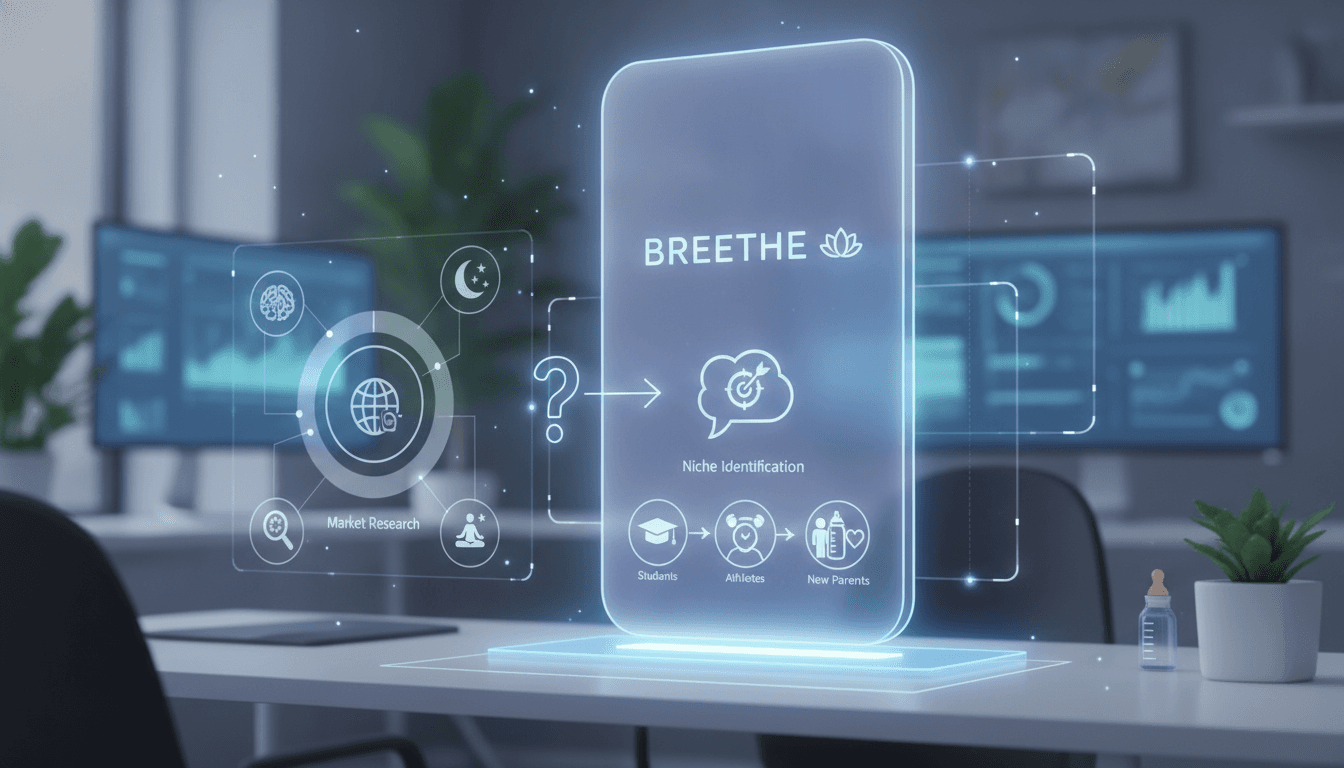
Start focused. Pick one audience (new parents, shift workers, students during exam season) and serve them better than the generalists do. Prove retention with a tight MVP, then expand the library and features from a position of evidence rather than assumption.
If you're ready to scope your mindfulness app, our team can help you move from concept to a validated, launch-ready product.
Have a project in mind? Contact Sodio Technologies to discuss your requirements and explore the right technology solution for your business.
/// Work with us
Talk to the engineers who'd build it
You'll get a technical scope, timeline and cost estimate from the people doing the work, not an account manager. In-house team, no subcontracting, since 2016.