

How to Make an App Like DogVacay
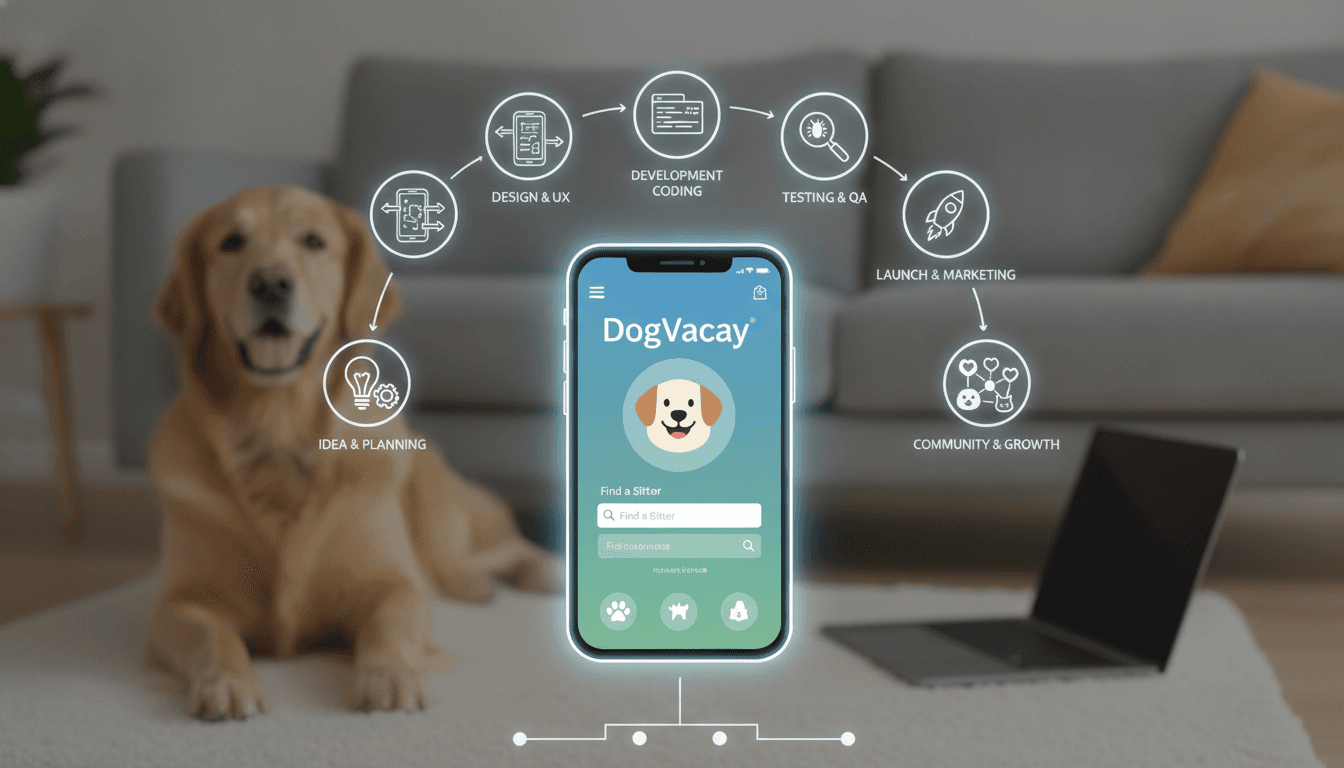
A practical breakdown of the architecture, features, and cost decisions behind pet-sitting marketplace apps — written for engineers who need to build one, not evaluate one from a distance.
What Does a Platform Like DogVacay Actually Do Under the Hood?
DogVacay, before it merged with Rover in 2017, was a two-sided marketplace connecting pet owners with local sitters and boarders. The core product sounds simple. In practice, it sits at the intersection of real-time availability management, trust and safety infrastructure, payment escrow, and location-aware search. Each of those is a non-trivial engineering problem on its own.
The platform has to support two distinct user types with different goals. Owners want confidence, convenience, and transparent pricing. Sitters want a steady booking pipeline, fair payouts, and protection from no-shows. Every feature you build serves one or both of these groups, and the tension between them shapes most of your architecture decisions.
Core Features You Cannot Ship Without
Before you write a line of code, you need a clear picture of what constitutes a minimum viable product for this category. Based on how Rover and similar platforms operate, the non-negotiable features are:
- Dual-profile system — owners and sitters have structurally different profiles. Sitters need availability calendars, service type listings (boarding, drop-in visits, dog walking, daycare), capacity limits, and photo galleries. Owners need pet profiles with medical notes, vaccination records, and dietary restrictions.
- Search and matching — location-based search with filters for service type, price range, pet size, sitter experience, and availability. This needs to be fast. Users abandon search results that take more than 3 seconds to load on mobile.
- Booking and scheduling — a calendar system that prevents double-booking, handles multi-day stays, and supports recurring bookings for dog walking.
- In-app messaging — owners and sitters need to communicate before confirming a booking. This also creates a paper trail for dispute resolution.
- Payment escrow — funds are held until the service is completed, then released to the sitter minus the platform commission. Rover charges sitters 20% and owners a service fee of 5–7% depending on booking type.
- Reviews and ratings — post-service, both parties rate each other. This is your primary trust signal.
- Photo updates — sitters send photo check-ins during the stay. This drives retention and repeat bookings more than any other single feature.
What Does It Cost to Build This, and How Long Does It Take?
These are the two questions every client asks first. The honest answer is: it depends on your stack choices and whether you build cross-platform or native.
Here is a realistic breakdown for a mid-fidelity MVP:
| Component | Approach | Estimated Dev Time |
|---|---|---|
| Backend API | Node.js (Express) or Django REST | 10–14 weeks |
| Mobile apps | React Native (iOS + Android) | 12–16 weeks |
| Real-time messaging | Socket.IO or Firebase Realtime DB | 3–4 weeks |
| Payment integration | Stripe Connect | 2–3 weeks |
| Maps and search | Google Maps Platform + Elasticsearch | 3–4 weeks |
| Admin dashboard | React.js | 4–6 weeks |
| DevOps and infrastructure | AWS or GCP, Docker, CI/CD | 2–3 weeks |
With a team of four engineers (two mobile, one backend, one frontend), you are looking at roughly 5–6 months to a testable MVP. A full production release with reviews, photo updates, push notifications, and a sitter onboarding flow adds another 2–3 months.
Build costs vary significantly by geography. In India, a senior engineer costs $30–60/hour. In the US or UK, you are looking at $120–200/hour for the same profile. Outsourcing the build to a firm like Sodio can bring the total MVP cost down to $40,000–$80,000 versus $150,000–$250,000 for an equivalent in-house US team.
Related reading: How to Make an App Like Wag!.
/// Not sure where to start?
Get the architecture before you commit
Tell us what you're building and we'll map the technical approach, stack, and rough timeline. No cost, no obligation, no sales call required.
How Do You Handle Trust and Safety at Scale?
This is where most pet-care marketplace clones underinvest and pay for it later.
Identity Verification
At minimum, sitters need government ID verification. Rover uses a third-party background check provider (Checkr in the US). For international markets, you will need local equivalents. Integrate an identity verification API like Onfido or Jumio at the point of sitter signup, not as an afterthought.
You may also find our article on How to Make an App Like Rover useful.
Insurance and Liability
DogVacay offered a $25,000 veterinary coverage guarantee per booking. Rover has maintained similar coverage through a partnership with Lloyd's of London. You cannot replicate this out of the box. You will either need to partner with a pet insurance provider, build the liability clause into your terms of service, or licence a policy through a specialist broker. Do not skip this step. One high-profile incident without coverage can end the platform.
Dispute Resolution
Build a dispute flow into your admin dashboard from day one. When a sitter claims an owner's dog was aggressive and the owner disputes additional charges, you need message logs, photo timestamps, and booking records in one place. This is an operational problem with a technical solution: structured data capture throughout the booking lifecycle.
Which Tech Stack Should You Choose?
There is no single correct answer, but there are wrong answers for specific contexts.
React Native is the right choice for the mobile layer if you have a single development team and need iOS and Android parity quickly. Performance on complex UI interactions is acceptable for a marketplace app. You are not building a game engine.
If this is relevant to your project, check out How to Make an App Like Airbnb.
For the backend, Django REST Framework works well if your team is Python-first. Node.js with Express suits teams comfortable with JavaScript across the stack. Both handle the concurrency requirements of a booking platform without issue at early scale.
Elasticsearch is the right tool for the sitter search layer. Postgres full-text search works at low volume but degrades quickly once you have more than 50,000 sitter profiles and complex filter combinations.
For real-time features (messaging, live booking status, photo update notifications), Firebase works well in early stages because it reduces backend complexity. At scale, you will likely migrate to a dedicated WebSocket layer. Build your interfaces with that migration in mind.
Stripe Connect handles the marketplace payment model correctly. It supports multi-party payouts, escrow-style fund holding via payment intents, and 1099-K tax reporting for US sitters. Do not build a custom payment layer.
Conclusion
Building a DogVacay-style platform is a well-understood engineering problem. The architecture is not exotic. What separates platforms that grow from those that stall is execution quality in trust infrastructure, search performance, and the small UX details like photo updates and booking confirmations that drive repeat usage.
If you are ready to scope the build or want a technical review of your existing plan, get in touch with the Sodio team. We have built two-sided marketplace products across consumer services categories and can give you an honest read on your timeline and budget assumptions within a week.
FAQ
How long does it take to build an app like DogVacay? A testable MVP with core booking, search, messaging, and payments takes 5–6 months with a four-person team. A full production release adds another 2–3 months. Timeline compresses if you use React Native for cross-platform mobile and a managed backend like Firebase for real-time features in the early stages.
What is the typical revenue model for a pet-sitting marketplace? Most platforms charge a commission split: a percentage from the sitter (Rover charges 20%) and a service fee from the owner (typically 5–7%). Some platforms offer sitter subscription tiers for reduced commission rates, which improves cash flow predictability and locks in supply-side retention.
Do I need a separate app for sitters and owners? Not necessarily. Most platforms use a single app with role-based views. Owners see booking and search flows. Sitters see booking management, calendar, and payout dashboards. A single codebase is significantly cheaper to maintain and reduces the QA surface area.
How do I handle payments across multiple countries? Stripe Connect supports multi-currency payouts in over 40 countries. For markets not covered by Stripe, you will need a local payment gateway. Mapping your expansion roadmap to Stripe's supported countries early saves significant re-architecture later.
What is the biggest technical mistake teams make when building this type of app? Under-building the sitter availability and calendar system. Double-bookings erode trust faster than almost any other failure mode. Invest in a proper calendar conflict detection engine from the start rather than patching it after launch.
Have a project in mind? Contact Sodio Technologies to discuss your requirements and explore the right technology solution for your business.
/// Work with us
Talk to the engineers who'd build it
You'll get a technical scope, timeline and cost estimate from the people doing the work, not an account manager. In-house team, no subcontracting, since 2016.